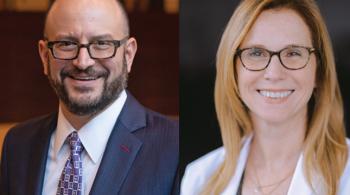
What is neurofibromatosis? On this month’s episode of Your Child’s Brain, Dr. Brad Schlaggar talks with neurologists Dr. Stephanie Morris and Dr. Jaishri Blakeley about this rare disease which affects about 1 in 2,500 individuals. They discuss what neurofibromatosis is, how it affects the body, and the ways it’s being treated at a new Kennedy Krieger clinic for pediatric patients, an extension of a world-class neurofibromatosis center at Johns Hopkins Medicine.
Learn More About Our Host and Guests
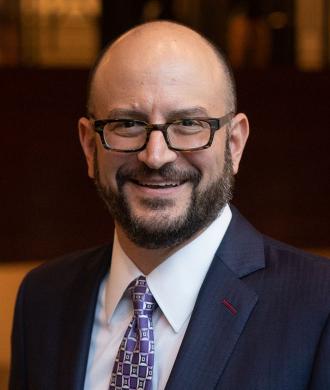
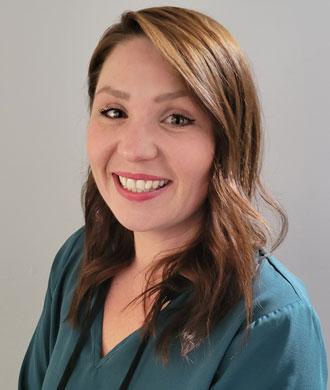
Stephanie M.
Morris
,
MD
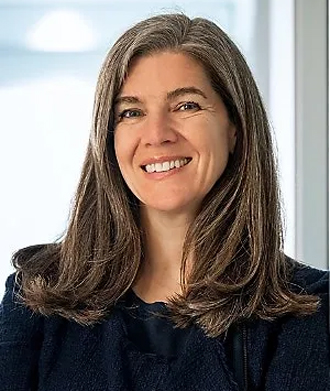
Jaishri Blakeley, MD
Dr. Brad Schlaggar (BS): Welcome to your child's brain, a podcast series produced by Kennedy Krieger Institute with assistance from WIPR. I'm Dr. Brad Schlaggar, pediatric neurologist, president, and CEO of Kennedy Krieger Institute. One of the points we make frequently on this podcast is that while having any specific rare disease is rare, having a rare disease is common. Nearly 10% of us have a rare disease diagnosis. Of the thousands of known rare diseases and disorders, a significant proportion show up in childhood and involve the nervous system. That's the brain, spinal cord, nerve, and muscle. In the United States, we define a rare disease as one that affects less than 200,000 people. That's less than about 11,700 people. In a typical general pediatric practice in the US, a given pediatrician has about 1,500 patients, give or take. The math works out that it's unlikely that a general pediatrician will have a patient in their practice with a given rare disease. Consider a condition like Rett syndrome, which we've mentioned on the podcast before. Rett syndrome affects about one in 10,000 girls, and it's highly unlikely that a given pediatrician will have had direct experience with Rett syndrome in their practice. By contrast, at Kennedy Krieger, because our focus is primarily on disorders of the developing nervous system, we necessarily see a lot of patients with rare disease diagnoses. Indeed, we have an entire clinical program devoted to Rett syndrome, and our scientists and clinicians scientists study Rett syndrome and myriad other rare diseases, their causes, natural history, co-occurring conditions, and very importantly, their treatment. Today, we're going to talk specifically about a rare neurogenetic disease that we have not yet discussed on your child's brain, and that is neurofibromatosis type 1, often referred to as NF1. NF1 is among the more common of rare diseases affecting about one in 2,500 individuals, best known perhaps for the neurofibromas or benign tumors that grow on nerves throughout the body. NF1 is a complex disorder involving multiple systems in the body, and importantly, and less well understood a significant risk for neurodevelopmental manifestations as well. For over 20 years, Johns Hopkins Medicine has had a world class neurofibromatosis center. In May of 2026, earlier this year, that center expanded to include the neurodevelopmental expertise of Kennedy Krieger via the Kennedy Krieger Pediatric Neurofibromatosis Program at the Johns Hopkins Comprehensive Neurofibromatosis Center. Joining me today to talk about this new program and the exciting direction is Dr. Stephanie Morris, a pediatric neurologist and the director of the new Pediatric Program. In addition, Dr. Morris is the medical director for Kennedy Krieger's Center for Autism, Services, Science, and Innovation or CASSI, and she's an assistant professor of Neurology at the Johns Hopkins University School of Medicine. Also joining me today is Dr. Jaishri Blakeley, neurologist and director of the Johns Hopkins Comprehensive Neurofibromatosis Center, a professor of neurology at the Johns Hopkins University School of Medicine. She is a physician scientist with expertise in both neurofibromatosis and brain tumors. Now, before we get much further, I think it's a good time to mention that what might be a common misconception about the relationship between Kennedy Krieger Institute and Johns Hopkins. Kennedy Krieger is not part of Johns Hopkins, but we have a six-decade-long academic affiliation with Johns Hopkins, of the 3,700 staff at Kennedy Krieger, over 200 of us, myself included, are on the faculty of Johns Hopkins, but employed at Kennedy Krieger. That long standing affiliation has made it possible for powerful and impactful collaboration in clinical care, research, training, and education. A wonderful example of that robust collaboration is the establishment of this pediatric neurofibromatosis program. With that Stephanie, Jaishri, welcome to both of you, and let's dive in. Jaishri, I gave the briefest of descriptions for neurofibromatosis in my introduction. Please expand on that and tell our listeners, what is NF, how common is it? How does it show up? How does it first appear in patients?
Dr. Jaishri Blakeley (JB): Thank you so much, Brad. It's really a joy to be with you and Stephanie today. There's nothing I like talking about more than NF. Happy to. NF, which is shortened for neurofibromatosis, is actually multiple disorders. There's NF1, the neurofibromatosis type 1, which is by far the most common. Then there are the schwannomatoses, which include NF2 schwannomatosis, LZTR1- schwannomatosis, SMARCB1 schwannomatosis. Multiple other forms that we know exists, but we haven't yet found their genetic cause, the name for them yet. Hence, your point about needing to merge our clinical care and research together so we can define these conditions and find their treatments. Across all of those, the schwannomatosis are unique in that they are far more rare. For example, SMARCB1 schwannomatosis is about one in a million, and NF2 Schanamatosis is about one and 25,000. Those involve internal tumors, of the vestibular nerves, of the linings of the brain called meningiomas, and along the spinal axis. But tend not to have neurodevelopmental or bone or other organ implications. Although we are now understanding that chromosome 22 is involved in some conditions linked to autism writ large and these tumor syndromes. We'll come back in a couple of years and talk about that as we better understand that. But NF1, neurofibromatosis type 1 is by far the most common. About one in 2,500 people worldwide are affected. What's really fascinating about NF1 is while it's penetrants, meaning if you inherit the gene from a parent or you have a genetic change early in utero, you will have the condition. It can be very mild, meaning you will have only skin manifestations, perhaps some minimal cognitive manifestations, but really it might take you until you're 30 or 40 and have children of your own to know you have the condition. Very mild. The other end of that spectrum is that there are children with NF1 born missing bones with incredibly large tumors that you mentioned, the neurofibroma and the one we worry about the most is the plexiform neurofibroma that in extreme examples involve an entire hemithorax or half a body. That can be quite extreme. Then most people live somewhere in the middle. The somewhere in the middle, those people often come to awareness of the diagnosis because of their pediatrician, noticing at a well child visit more than six cafe-au-lait macules, those are things that literally look like coffee plus milk added that are a little larger than a freckle and maybe some actual freckling in the armpits and groin, unusual places, especially in a young child to have sun exposure causing freckles. Then we look for the other things that Lisch nodules, which are form basically a freckle on the eye, on the iris, and the bone changes, tumors, etc. Often it is the pediatrician who is notifying the rest of the team, genetics, developmental pediatrics, neuropediatrics, or the NF center that this child might have the diagnosis. Then that's when Steph and I get involved in confirming the diagnosis and figuring out for that child what the risk factors might be from the most mild to the most severe.
BS: I want to ask you both how you each got started in this area. But Jaishri before we go further, you use the term schwannomatosis, and I think we're probably not going to talk much more about that throughout the rest of this discussion. But just it's a word that some might not have heard before. schwannoma, Schwann cells. Maybe just say a couple of things about where that's coming from.
JB: Sure. Schwann cells are a really important cell in our body. They are essentially the insulation of the electrical system of our nervous system. Just like for all this equipment we're using, we can't just have loose wires. We have to wrap them in something. The Schwann cells wrap our nerves. Schwannomas are simply sloppy nerve wrapping. Instead of being a nice smooth, plastic outside that you might imagine on your plugs or mouse cords. It is too bumpy. There are too many Schwann cells. They are benign. They are not cancers. They just didn't get the signal to stop dividing, and they tend to be in inconvenient locations, across joints where the nerve needs to be sleek and thin, and instead it's bulky and causes symptoms. Many people have schwannomas. We estimate that about one and 2,000 people have an isolated schwannoma that they might not even know about. It's no big deal. It's like having another benign tumor called a lipoma. It just is too many cells, they're not cancer, they never become cancer. But if you have one of those schwannomatosis, the problem is the multiplicity. There are hundreds and maybe thousands or tens of thousands of those tumors in the wrong area, the wrong real estate, and then we need treatments.
BS: Thank you for that. Let's talk about your own origin stories in this area. Steph turned to you first, where did this interest in NF came from?
Dr. Stephianie Morris (SM): That's a really good question. I have to say I did not start out thinking that I was going to be an NF-ologist. But I had the amazing fortune of doing my child neurology residency training at an institution that had a really well established pediatric NF program. Of course, all the trainees rotated through that program. But I was especially interested in this combination of research, clinical care, as well as community therapy programs that existed for patients who were in this NF program, and being able to impact their lives in many different areas was really intriguing to me in this program that was built there. I actually requested to spend more time in that program and learn from an amazing NF physician. The more that I met with and learned from the NF patients, the more I realized I had no idea what NF was. Anytime I had one question answered, I'd have five more questions, and I'm just a naturally curious person by nature. It was the perfect condition. It was the perfect setup for me to be able to ask endless questions and not necessarily have the answers, but be able to probe and learn and really hone my own research skills and be able to help impact the lives of these kids and their families. It was something that found me and something I quickly fell in love with.
BS: Thanks for that. I know that part of that is your interest in the neurodevelopmental manifestations of it. We're going to get to that in a second. But Jaishri, what's your origin story with NF?
JB: Similarly, NF found me, and then I quickly became infatuated. I am a neuro-oncologist by training, which means I completed my initial training in adult neurology, and then did a three-year fellowship in oncology to treat tumors of the nervous system. I was invited to the NF Center clinic that existed at that time under Kaleb Yohae. Then he introduced me to the first set of families and patients, and they are amazing people, and it's a fascinating condition. I really had a sense coming from neuro-oncology, which doesn't always feel hopeful. There is a lot of hope there, but not always. I really felt we can do something here. We know the gene, we understand this pathway. That was very compelling both from the interpersonal interaction with the patients and the pathway interrogation. From there, when Dr. Yohae left, I took over the fledgling clinic, and we started all of that research, and here we are.
BS: Steph, back to you, let's talk some more about the neurodevelopmental issues in NF. What they are. Then just early in your own career, you did seminal work leading to the observation that the mutation causing NF1 is a significant risk factor for autism. Tell us about that work, what went into it and what you learned from it.
SM: I'd be happy to. When I was in training and as I was going room to room, it was very clear to me that these kids were developing differently than their typical peers. At that time, this would have been about 10 years or so ago. There were a number of researchers who were studying neurodevelopment in NF1, who were also recognizing that children with NF1 seemed to be presenting with symptoms that looked an awful lot like what we would see in kids with autism. Each of these researchers were studying their own generally pretty small cohorts of maybe anywhere from 20 to maybe 60 kids that they had in their clinic and trying to really qualify. What are these symptoms that we're seeing? What are these behaviors that we're seeing? Is it autism? Is it something else? Really trying to wrap their head around what this behavior and developmental profile was emerging? Each one of them, there are maybe five or six papers that came out at the time publishing their own results. Each paper laid out their own idea of what this was. Some of it was overlapping, a lot of it wasn't overlapping. It actually left more questions than it answered our questions. We used it as an opportunity to really do true team science and pull together an international cohort of researchers. There were six different sites. We had three within the United States, on the East Coast and the Midwest, and the West Coast. Then we had three outside of the United States and Belgium, the UK, and Australia. We were able to pull together over 500 patients with NF1. Most of them children, some of them were adults and really be able to do some really great sophisticated statistical analysis on this data to really try to hone in on what this was that we were seeing. It was a really great dataset because it was really culturally diverse. The results presumably are pretty generalizable because we were gathering data from kids everywhere. What we were able to essentially demonstrate is that autistic traits are unequivocally elevated in people who have NF1. The really interesting thing is that the way that they're distributed across NF1 essentially mirrors what you see in the general population. There are people who have essentially no detectable autistic traits and the very, very mild end of our assessment scale. Then those that are in the very, very severe range where they have pervasive functionally impairing, issues with social communication and restricted and repetitive behaviors that constitute an autistic phenotype. Then we have everyone in between, which was really fascinating that NF1 really recapitulates what we see in the general population. But everything is shifted, and so the number, the proportion of people with NF1 who have elevated autistic traits is certainly higher than what we see in the general population. We were also able to show that autistic traits and NF1 track very, very closely with ADHD-related symptoms, which was our first inclination that there's a shared biology here and that perhaps they are just two different manifestations of the same neurobiology. Even more importantly, we showed that they're completely dissociated from IQ. Which was really, really important to demonstrate at the time because there was a lot of conjecture that what we were seeing was just a product of cognitive impairment and intellectual disability, which just simply isn't true. We know that they're completely dissociated and that this neurobehavioral or neurodevelopmental phenotype has nothing to do with how smart a child is or what their intellect is. Perhaps the most fascinating and interesting piece of the data that we were able to pull out was that because we had so many patients, we had the opportunity to study first degree relative pairs. We had, I think it was 22 first degree relative pairs, and they were cross generational. These were sibling pairs, maybe a brother and a sister, as well as parent child diads. First degree relatives, both of whom had a diagnosis of NF1, and presumably shared the same NF1 gene mutation in inheritable fashion. What we showed was that autistic traits clustered within families, such that if a parent had really elevated autistic traits, so did their child. If a sibling had really low autistic traits, their sibling who shared that same NF1 gene would also have low autistic traits. This clustering of autistic trait burden was far higher than what we would expect on the basis of chance alone and three times higher than what we would expect on the basis of genetic background. The fact that they share most of their genes, it was higher than what we would expect just on that basis from what we know from the general population. It really put forth this theory, this idea that the NF1 gene itself, the mutation in that gene is actually a major driver of autistic trait burden and NF1 and is actually a quantitative trait locus. The mutation itself might be driving how severe someone's autistic manifestations might be.
BS: Very interesting work and I recall when it was being carried out early on in your career, pulling together investigators from across multiple countries was remarkable. This insight is really intriguing. Jaishri, I would ask you, there's a potential role for the NF1 gene and its mutation in NF that may be etiological for these neurodevelopmental manifestations, but we also know that there's other manifestations. It's a complex condition that has myriad implications of the genetic mutation. What do we know about that? What do we know about how that gene in its mutated form can manifest in various different ways that we've described already?
JB: Sure. Maybe I'll take a step back and talk about the NF1 gene and then the NF1 protein and the job of the protein. First of all, we have hundreds of genes, and they each have a job. Some of those genes have redundant jobs. If you have a change in the reading of one gene, it doesn't matter because there are six other genes that take over. NF1 appears to be a gene that doesn't have redundancy. If NF1 is not working the way it should be, there will be manifestations, but we do not understand why some can be so much more severe and varied in one person versus not in another person. I'll start with the top line statement which we have knowledge of a relationship between the type of alteration in the NF1 gene called genotype and the way that shows up in a person called phenotype. We have that for exactly five variants in the NF1 gene, there are more than 3,200 ways the NF1 gene has been proven to be altered that results in a clinically significant phenotype. Five out of more than 3,200 isn't awesome. We are actively working on this problem and trying to understand what type of alteration in the gene results in what problem. The other way to come at that is to look at the protein and really excitingly and a little bit shockingly given how modern medicine is moving. Just three years ago, the protein structure was clarified. Really cool. I'm going to nerd out for a minute. A really cool discovery is that it's a dimer, and that means that instead of living as a rod, just a straight line that hangs out there and we understand everything about it, it is a hinge and it opens and closes in a little bit twist, and that means there are multiple different targets in how that protein might get stuck in a particular degree of opening or a particular degree of closing or a particular twist. That might explain some of the clinical variability that we see that is not linked to the gene alteration. The gene alteration might not matter that much, or it might matter partially into how that protein functions. Now a lot of energy is going into studying the protein. I'll just add one more thing to that because it was so cool, what Steph was saying about behavior, cognitive neurodevelopment, and that NF1 recapitulates the general population for these considerations, that is also true of tumors. What's so cool about this clinic and our partnership is I'm a tumor person through and through, I should be more informed about brain development that doesn't have to do with cancer, given that I'm a neurologist, but I really call Steph for all of those questions. In the tumors, people with NF1, it is known as a neurocutaneous tumor predisposition condition. There are a handful of tumor predisposition conditions, meaning you're born with it and you are going to have a tumor of some kind. We are hopeful and oftentimes it is benign, but it can be cancer, and our job is to find it and treat it before it turns into cancer. It turns out that the NF1 gene is also mutant in many sporadic tumors, glioblastoma, melanoma, breast cancer. People who don't have NF1 and get common cancers, those common cancers have an NF1 loss. Just like the work that Steph was talking about, if we understand better what is happening to people living with NF1, we will help the people living with NF1, but everybody else living with a condition that is like NF1, same for all the tumors.
BS: Steph, picking up on the point Jaishri just made about really the beauty of this collaboration in the clinical space, talk some more about the clinical program itself and how the teams from Kennedy Krieger and Johns Hopkins partner on the Continuum of Care.
SM: Just like Jaishri said, it's traditionally considered a tumor predisposition syndrome and a lot of emphasis and a lot of brilliant science has gone into identifying the tumor manifestations, trying to find new therapeutics for the tumor manifestations. Rightfully so because many times they can be life threatening or life altering and cause a lot of morbidity for these patients. Increasingly, we're also recognizing that it's increasing risk for neurodevelopmental vulnerability. We talked a little bit about the autistic presentation and phenotype in NF1. But we know that our kids with NF1 are also at risk for ADHD-like behavior, so attention regulation issues, impulsivity, difficulty with inhibitory control. We see problems with executive functioning. These are things like time management, organization, task monitoring. We see problems with adaptive functioning and self care, being able to brush your own teeth or get dressed in the morning or being able to organize your own routine during the day. We also see differences in sensory processing and learning and academics, and these neurodevelopmental and behavioral issues occur in most of the kids that we see. A good estimates about 80% of the kids with NF1 are going to have some behavioral or neurodevelopmental liability that is negatively impacting their day. It's really important that we identify it because if we're able to provide educational supports, behavioral health supports, mental health support, appropriate developmental therapies early on and help children and their families manage the developmental and behavioral piece early on. My hope is that what that translates to is better functioning in adulthood, so that when we pass kids off to the adult world, there are adults who are functioning independently, they can manage their own medical care, they can advocate for themselves, they can identify and access mental healthcare needs, they have a better quality of life. For me, it's developmentally-informed medical care. That's what I think this expansion really helps to provide, which is the seamless integration of recognizing that child doesn't just have tumors or a child doesn't just have neurodevelopmental issues, that it's a child who has all of these things. We really try to provide holistic care for that child. As it stands, the pediatric NF program geographically sits within Kennedy Krieger Institute, and that's where All of our kids will get their annual NF surveillance and care and have access to all of the amazing services that Kennedy Krieger has to offer from rehabilitation support after a spinal cord surgery, for example, or speech therapy support or behavioral psychology services or neuropsychological services, but also have access to the world class surgical and medical care that exists within Johns Hopkins School of Medicine, from ophthalmology and neurosurgery and radiology and oculoplastics, you name it, all of the amazing specialists who are over at Johns Hopkins. Beyond that, one of the most vulnerable times in a child's life is in that adolescent young adulthood, and we know that in pediatric chronic conditions, whether it's a rare disease or a common disease, that transition age is a really vulnerable time where kids tend to fall through the cracks and have a harder time transitioning from the pediatric care model to the adult care model, especially in pediatric patients who have neurodevelopmental impairments or neurodevelopmental differences. Our goal with partnering with the existing amazing multi-disciplinary program that Jaishri has developed is to be able to improve that transition of our pediatric patients into the adult world with a warm handoff to team members who know them, who know us. That way, we really are treating the entire child over their entire course of their life, and that's really the dream and that's the goal.
BS: As I said earlier, I think that's why this program and the expansion of it is such a wonderful example of how to leverage through this partnership between Johns Hopkins and Kennedy Krieger, long standing to take full advantage of the extraordinary clinical and clinical scientific resources that we have. It's really a perfect example of that. Jaishri, you mentioned that you've been engaged with this comprehensive center since it was fledging, taking on the leadership of it early on. From your vantage, how has the care of patients with neurofibromatosis changed over those couple of decades now?
JB: It's remarkable, the change, and I will say the real change has been in the last 8-10 years, the last decade. We have two FDA-approved therapies for plexiform neurofibromas, while plexiform neurofibromas are one of the many manifestations of NF1 that we've talked about. Having a agent that has shown biologic activity against a molecularly driven process. What I mean here is the plexiform neurofibromas happen because of the loss of NF1 and having an agent that stops their growth, shrinks them, and also stops pain, returns neurologic function, kids who couldn't swallow can swallow, kids who couldn't control their bladder, get back bladder function. It's pretty remarkable. It makes for a very good day in clinic when you get these responses to these drugs. That all happened first in 2020, and then just last year we had our second approval, and then this year an extension of the first approval for adults. That opening of one pathway, these are MEK inhibitors. That's one node. If you imagine, I like to think about the NF1 works at the top of a waterfall, and we have blocked one little stream of that waterfall with MEK inhibitors. There are probably 400 other streams happening, but we've seen activity in blocking one of those streams. It completely changes the hopefulness and possibility and intellectual and literal investment in understanding what other streams are important to how people show up with NF. Our focus on tumor all of that time was indeed intentional because it's very, very measurable. You get an MRI, you determine a rubric by which nobody will argue that that tumor got smaller on MRI. It's not based on some variance and that can lead to regulatory approval. The proof that you've improved somebody's behavior or cognition or daily functioning is a lot harder. But now that we've been able to show this with tumor and shown also that as we shrink tumor, I guess this would feel obvious, but we did have to prove it that if you shrink tumor people feel better, now we have some tracks in the sand to follow for the other manifestations, bone and vascular and importantly brain development and peripheral nerve development. I feel like the last 10 years has been pretty revolutionary. Probably the last most important thing that happened was the discovery of the gene, and these last 10 years, we've actually been able to put that to work. I think these next 10 years will be pretty explosive in terms of new discoveries.
BS: Now, not every major center necessarily has a neurofibromatosis program, let alone a comprehensive one. We're very fortunate to have here in Baltimore and Maryland serving patients from the region and beyond. What each of you recommend to patients and families to advocate for themselves if they don't live near a specialized NF center? Jaishri, maybe you start with that.
JB: Sure. The first thing I'll say is that we participate through something called the NF clinical network, and that is led by the Children's Tumor Foundation, which is a not for profit foundation committed to management and research in the neuropharmatosis and Schwannomatosis domains. Any person can log on to Children's Tumor Foundation, and there is a map of where all the certified NF centers are, and you can find out if one is close to you. If there's not, still reach out to any of us that's closest to you, and certainly one of the important things we have in our center is a nurse who is our both patient navigator, family navigator, and physician navigator, who says, this person is in need. They live here, their insurance is x. How do we help? We will help. We are so hyper specialized that we pretty much know the providers in every state and in many countries, and we are committed to helping people find the care that they need to find.
BS: Steph, anything that you would add to that?
SM: Yeah. From a neurodevelopmental perspective, if you have a child who has NF1 and you're not near a specialized center, you are going to be your child's best advocate. You're going to be their best advocate, even if you live near a specialized NF center. Partnering with your pediatrician, partnering with the school system, trying to find local therapy services and getting to know speech therapist, physical therapist, occupational therapists in your area, and making sure that you're getting those services started early is really important. You don't have to come and see somebody in a specialized NF center in order to get educational support started or to get therapy services started. I would rely very heavily on your pediatrician to help guide which therapies might be important. Just like Jaishri said, there's always options for second opinions and telehealth visits, and just informal phone calls to help support and provide care to people who live in verbal places that maybe don't have the medical care that's available in big cities.
BS: The resource that you identify, Jaishri, the Children's Tumor Foundation website, I think we can provide a link to that on the page associated with this episode, and we'll include any other links that the two of you think would be helpful to be a resource on that page. This is my last question. It's often, I think maybe the most enjoyable one because it asks you to talk about your work or what most excites you, what's on the horizon for NF. Steph, I'll start with you and then ask Jaishri to add in as well.
SM: Just like Jaishri said, we have a way to measure tumors. We are able to take MRIs, we have paradigms that exist to radiographically measure them. We don't yet have a way to measure the neurodevelopmental phenotype in NF1. We have individual assessments that are diagnostic and can measure a very specific construct. We can measure autistic traits, we can measure ADHD traits, we can measure child's executive functioning. But we know that these individual assessments do not fully capture the multi-dimensional transdiagnostic phenotype that we see in NF1. I think of it. The way that I conceptualize it because I'm quite simple is like baking bread. In the very basis, bread is like flour, yeast, sugar, and water. You can measure all those ingredients. They're all important, but they're not bread. That's how I think about autistic traits and ADHD traits and executive functioning and adaptive function is, we can measure them, but it's not what it is, and we really need a way to measure what it is. Hopefully in the next five years, maybe even sooner, we'll actually have an NF1 specific measure, and that's something that me and my colleagues internationally are working on is to create an NF1 specific neurodevelopmental clinical outcome assessment that is actually able to measure the bread, what is it that is in the human child that is causing functional impairment derived from NF1 specific data. It's from NF1, for NF1, and fitted specifically for them because a lot of the tools, actually, all of the tools we use are not made from NF1 data, they're standardized in validated in the general population. The other piece of this, again, using the tumor translation of this is that we don't know when to treat kids yet. We know that there's a large group of kids who go on to have pretty significant functional impairment in their day, but there's certainly a group of kids who don't, and we don't yet have a way to stratify them. We don't yet know how to predict who's going to go on to have a lot of neurodevelopmental vulnerability and who isn't. What the NF world is lacking right now in the developmental and behavioral space is natural history data. The goal is to create a prospective longitudinal natural history study that's recruiting kids very early in the first thousand days of life and following them longitudinally with a variety of different imaging, electrophysiology, developmental and behavioral screeners, and following them over time to try and determine whether or not there's a specific optimal timing for intervention for developmental outcomes. We need to know who, and we need to know what, and those are the two big gaps that we have right now. I'm hoping fingers crossed that in the next 10 years of my career, I'll be able to answer those questions.
BS: It's great. Jaishri.
JB: I'm most excited about Steph's research. But seriously, we have not made inroads on understanding cognitive behavioral developmental concerns, and every parent asks about it, and I say, please talk to Dr. Morris. We need to really dig in there, and we are getting closer to understanding the biology, and as these tools that Steph was mentioning are built, they don't sound very sexy. When we talk about natural history studies, it's hard to get an NIH study section to be excited about that and yet you cannot bring a single therapy to therapeutic development to the level that you're going to get FDA approval and a commercialization path so that it's widely available for any prescriber to write the script and give it without that data. I'll stick with the corollary between tumor and neurodevelopment. We started a natural history study in our community at the NIH 35 years ago, and NTAP partnered with that group in 2016-18 to organize all of that data to compare it to the therapeutic data being developed for MEK inhibitors, and that was crucial to developing the approved therapy that proved a difference between natural history. I haven't heard your bread analogy before, but I love being able to define what kind of bread this is and how we get the right loaf every time. From my work, I'm a tumor person, and we are continuing to focus on tumors. The organization that I am honored to direct from my research life is called The Neuropramatosis Therapeutic Acceleration Program, and that program was developed with the idea that if we focus all of our attention and resource and creativity on two problems, we can solve those problems versus being spread out across the millions of problems that can happen. We focused on plexiform neurofibromas, the deep tumors that are very concerning and can be dangerous and got those two FDA approvals, not alone, of course, with hundreds of thousands of collaborators in an entire field, and most important collaborators, the patients and their families. Now we've turned our attention to the cutaneous lesions, which are skin lesions, that they look like a bug bite that's inflamed or maybe a wart, and people can have hundreds of thousands of them to the point that they are completely isolated, socially, have difficulty interacting in the world, and have a lot of pain and itch. We are focusing a lot of our attention on understanding why the exact same cells that make up the plexiform tumors and those plexiform tumors can become a sarcoma that is very deadly. The cutaneous tumors do not become a sarcoma. If we can figure out why the cutaneous do not, then maybe we can prevent any sarcomas. That's one aspect. The other thing is we need to understand, the cutaneous tumors are made up again of exactly the same cells as plexiform. Children with NF1 are born in utero, they develop plexiform neurofibromas. They are born with the evidence of tumor. Cutaneous neurofibromas don't really show up in number and size until you're in your 20s or 30s. We're trying to understand why that is to see if we can simply prevent that manifestation forever.
BS: Jaishri, I'm going to just reinforce the point you made earlier about natural history studies. We talk about rare disease on this podcast often. There is rarely an episode that does not reinforce the importance of natural history studies. Again, not sexy, but critical. If we don't have that information, we cannot know whether an intervention is helping, especially in a rare disease setting. Just reinforcing that point, and with that, I think that's a great place to end. I want to thank our guests, Dr. Stephanie Morris, and Dr. Jaishri Blakeley for joining us today for our discussion about neurofibromatosis. I hope that you, our listeners have found today's discussion to be both interesting and informative and that you'll share this podcast with your friends and family and rate us if you're so inclined. Please check out our entire library of topics on Your Child's Brain at wypr.org kennedykrieger.org/ycb or wherever you get your podcasts. You've been listening to Your Child's Brain. Your Child's Brain is produced by Kennedy Krieger Institute with assistance from WYPR and producer Mark Gunnery. Please join us next time as we examine the mysteries of Your Child's Brain.