By Arriane Kernes
Kennedy Krieger Institute is recognized nationwide for its excellent school programs and patient care. Its commitment to individuals with neurological, rehabilitative, and developmental needs doesn’t end there. Through the CORE Careers program, offered by Kennedy Krieger’s Neurodiversity at Work department, the Institute also helps individuals with disabilities enjoy the dignity of work through employment.
“Community members may come to us ready for employment, or they may already have found a job but need support in their new workplace, or they may come to us really needing those building blocks to get ready to have a job,” explains Hannah Wayne, director of Neurodiversity at Work.
“We designed CORE Careers to offer different pathways to employment—to offer the steppingstones that everyone needs to be a part of the workforce.”
Training for the Real World
CORE Careers is part of Neurodiversity at Work’s larger CORE Foundations program, where the words “Community,” “Opportunity,” “Respect,” and “Employment” don’t just provide the letters that make up the acronym, but also guide the program’s entire mission. CORE Careers focuses on the “Employment” aspect: In Empowering Employment, its 20-week, on-the-job, train-to-hire program, participants—referred to as “community members”—learn valuable job-development skills through hands-on training.
Seeing the longevity of [a community member’s] success in a specific job … is so rewarding.” – Hannah Wayne
CORE Careers is designed to adapt to the needs of community members at their pace, no matter how far along they are in their careers. Services offered include mock interviews; social skills training; help with building resumes; a weekly job-readiness curriculum; ongoing, long-term, one-on-one employment support; and more. CORE Careers also partners with and supports a variety of businesses by providing training, guidance, and resources to help create inclusive and supportive workplace environments.

Virtual Reality
Recently, CORE Careers introduced virtual reality simulations to take its workforce training even further. For example, the program is using a special platform (Floreo) with virtual reality headsets (by Meta Quest) to help community members practice street safety, navigate public transportation and bus schedules, and recognize street signs. The virtual reality simulations are also being used to help community members develop social skills and other real-world skill-building opportunities that promote independence.
“Our goal is to move from helping community members find a job, to supporting them in that job, including walking them through the steps needed to be able to show up,” explains Toni Massimo, a meaningful day services coordinator at Kennedy Krieger. “We can use virtual reality to help them practice these tasks.”
Incorporating this technology enhances the realism of the training, making community members’ transition into the workforce even more seamless.
It's innovations like these that allow CORE Careers to give community members the opportunity for an entire lifetime of fulfillment. The impact is undeniable, and it only continues to grow.
“We support several community members who have been employed in their jobs for longer than five years at this point,” Wayne says. “Seeing the longevity of their success in a specific job and seeing their increased responsibilities over time is so rewarding.”
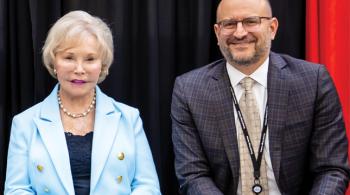
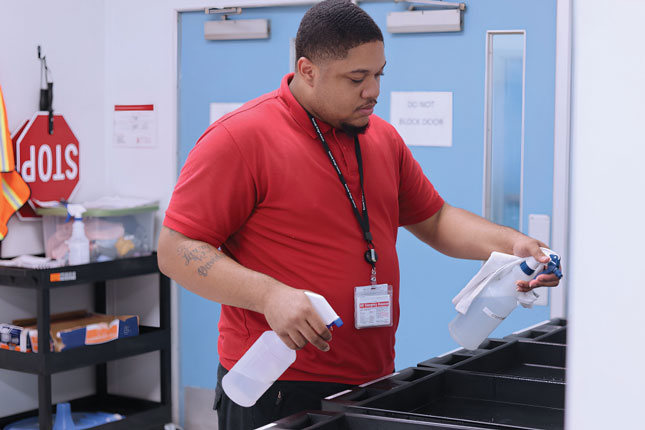
Jhonathan Rowe (first photo) and John Perry (second photo) work at Kennedy Krieger and receive on-the-job support from the Institute’s Neurodiversity at Work department.