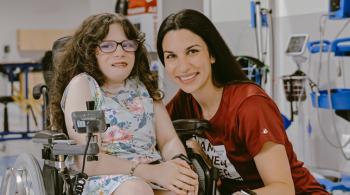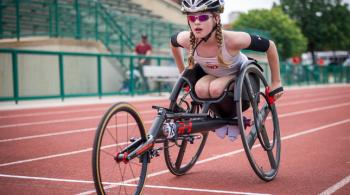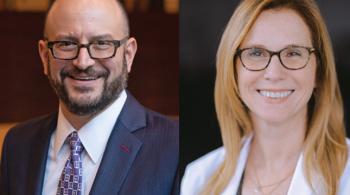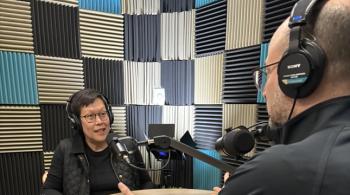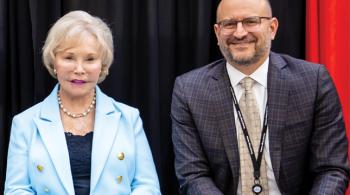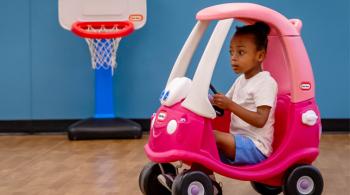
Accessible design is a concept picking up traction around the country. But it’s also something we’ve considered for years here at Kennedy Krieger—how do we make our spaces, both community and personal, to be functional for all? What resources are available for families who want to make their homes or even their communities more accessible? Join Dr. Brad Schlaggar, president and CEO of Kennedy Krieger Institute, and guests, Dr. Rebecca Seltzer of The Johns Hopkins University School of Medicine, and Chris Mason-Hale, a community advocate with the Maryland Center for Developmental Disabilities at Kennedy Krieger, as they discuss accessible design in everyday living.
Resources for Accessibility:
- KIND for Families — Three courses focused on roadmap for early development, a guide for navigating disability resources, and guide for military-connected families.
- Playgrounds for All! — A searchable list of accessible playgrounds, plus a toolkit for designing accessible play areas.
- Neurodiversity at Work Training and Education — Includes information about workforce awareness and inclusion training
- Understood.org — Resources and information for school-based support for many children and youth with disabilities
- Feels Like Home — A short film about life at home for children with disabilities, produced by Johns Hopkins Berman Institute of Bioethics and the Dracopoulos-Bloomberg iDeas Lab
- Opening Doors to Home Accessibility — Provides information about adapting a home for a child with a disability
- National Directory of Home Modification and Repair Resources
- Maryland’s Home Modifications Directory
- Maryland Assistive Technology Program (MDTAP) — Helps Marylanders with assistive technology services; 410-554-9230
- Telecommunications Access of Maryland — Assistive technology for anyone who is Deaf, Hard of Hearing, or has any difficulty using a traditional telephone; 800-552-7724, 7-1-1
- Mid-Atlantic ADA Center — Provides information, guidance, and training on the Americans with Disabilities Act (ADA); 800-949-4232
- 2027 Tapping Into Talent: Innovation and Opportunity — A national conference run by Kennedy Krieger’s Neurodiversity at Work program
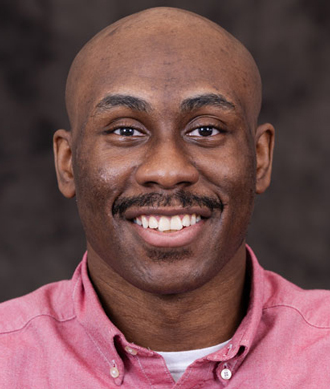
Learn More About Our Host and Guests
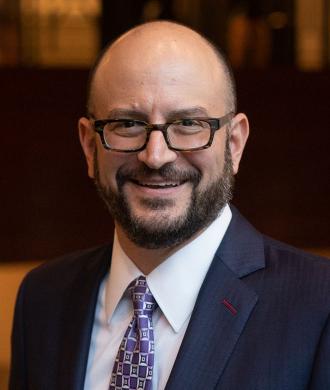
Christopher Mason-Hale, BSW
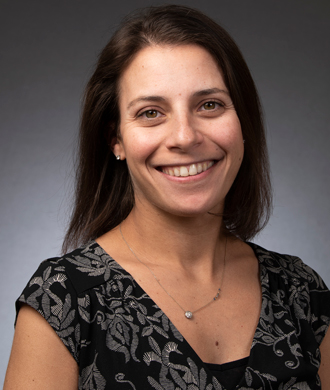
Rebecca R. Seltzer, MD, MHS
Dr. Brad Schlaggar (BS): Welcome to You Child's Brain, a podcast series produced by Kennedy Krieger Institute with Assistance from WYPR. I'm Dr. Brad Schlaggar, pediatric neurologist and President and CEO of Kennedy Krieger Institute. One of the remarkable things about Kennedy Krieger is that by the nature of the work we do, we have the potential to follow a patient or student throughout their entire childhood and into adulthood. Our patients and students come to us with neurodevelopmental concerns. Sometimes those concerns come from a common developmental issue or a rare neurogenetic condition. Sometimes they're acquired, such as after a brain or spinal cord injury or neurosurgery for a tumor, for example. Then through our interdisciplinary clinical and rehabilitative services, we make sure that they have what they need, to grow, to learn, and to have the opportunity to be kids in their everyday lives while giving them a pathway to as fulfilling a life as is possible. That's our goal, our purpose, our mission. If you're a regular listener to this podcast, you may know that roughly one in six children in the United States has some type of developmental disability. That equals 14.5 million children who have challenges with cognition or language or behavior, mobility, or disruption of sensory function like hearing or vision. Commonly, individual children can have multiple challenges simultaneously. One in six, that means that you're very likely to know a child, perhaps your own child or a child of a loved one with such a disability. Therefore, you likely know a child who is navigating the world today and encountering some type of barrier, whether it be the lack of a curb cut for a wheelchair, stairs, without a ramp, or perhaps a sign that's hard to read because of the colors that have been incorporated into it. Those are just some of the common challenges individuals with disabilities experience. Because of the work we do at Kennedy Krieger, we have thought creatively for years about these daily life obstacles faced by individuals with disability and the ways we can make or help make modifications to remove or at least circumvent those obstacles. Now we're excited to expand those efforts. Last year, an interdisciplinary team of experts and advocates convened and as part of their work, compiled an inventory of the ways we implement what is now known as accessible design. Our team considered not only current implementation here at the institute, but also the new initiatives we want to try in the future. I think we're right on time, as it turns out, because we're joining a movement of experts and advocates who understand that accessible design is the best practice for all of us. So let's take a step back and ask, what exactly do we mean by accessible design. Accessible design is the way we create or modify products, services, and our built spaces so that they're fully usable for people with or without physical, sensory or cognitive disabilities. It allows our spaces, both community and personal to be functional for all, which is the ideal. Last month as part of our regular Webinar series called Exploring the Brain. We welcomed a panel of experts from Kennedy Krieger from the Johns Hopkins University School of Medicine, and the leadership of Maryland's Department of Disabilities to discuss accessible Design. These experts shared their insights about accessible design and the ways that we can expect to see it show up around us. Today, two of those webinar panelists are joining me to keep the conversation on this topic going. They are Dr. Rebecca Seltzer, an Associate Professor of Pediatrics at the Johns Hopkins University School of Medicine, who focuses on improving care and well being for children with medical complexity. Through her research and advocacy, Becky is working to improve home accessibility for children with disabilities in Maryland and across the country. Also joining us is Chris Mason-Hale, a community advocate at the Maryland Center for Developmental Disabilities here at Kennedy Krieger. He's a member of the Baltimore City Mayor's Commission on Disabilities and has been appointed by the governor to the Maryland Commission on Disabilities as well. Chris, who uses a wheelchair for mobility, will share some of his experiences and his key involvement in a new project at Kennedy Krieger. Welcome Becky and Chris. In the intro, I offered some language to define accessible design, but I'd like each of you, perhaps starting with Chris to define it for yourselves.
Chris Mason-Hale (CMH): Thank you so much for having me and for the intro. Accessible design to me is all about creating spaces, products, and experiences that allow everyone to be immersed, whether it be a restaurant, a concert, or a business conference. I find that great accessible design almost feels tailored to you when you experience it. The less the community know that you thought of them and anticipated their needs. This way, they get to enjoy rather than feel the stress of anticipating barriers, which can add a lot of effort for the disability community, especially when deciding places to go or products to support.
BS: Becky?
Dr. Rebecca Seltzer (RS): Thanks for having me here today. I agree with everything Chris said. Just building on that, since a lot of my work focuses on accessibility within the home. I think of it as having homes that are modified or constructed to allow everybody in the home to be able to participate fully and within the work I do with children, what does that mean for a family to all be able to participate. To be able to sit at the dinner table together and eat a meal together, to be able to bathe easily and with dignity for children to be able to assert their own independence and different activities of daily living and reduce some of those caregiver needs. As Chris mentioned, really making it individualized, so not getting stuck on thinking that accessible design means that you check some boxes on ADA compliance, but that you really work with all the people who live within the household to make sure that that home works best for them.
BS: But before we go deeper, I think it's always interesting to hear how somebody like yourself gets into this line of work, this direction. If each of you starting with Becky, could talk about that pathway for you, and maybe sure what a typical week is like for you working in this space. Becky.
RS: Sure. I became interested in this topic almost probably eight years ago. I do a lot of work focused on children in foster care who have disabilities, and we held a convening at the Berman Institute of Bioethics where we bought together folks from all different sectors across Maryland to think about gaps in services and supports for children with disabilities, particularly those who are at risk of entering the child welfare system. One of the things that emerged in that convening was the challenges with housing and Housing were actually people who were not brought to the table because we weren't recognizing how important that was. We were learning that there are some children with disabilities who because their homes are not accessible spaces or because they don't have stable housing, they were going into the foster care system, which felt really morally problematic that that's the reason children were being separated from their families. So that led me down a path to do research, really just to explore, we started surveying and interviewing families in Maryland who have children with different types of disabilities to understand what was their housing experience. What did that look like for them? Through that work, I became particularly interested in the accessibility piece of it. Then we went into the homes of families. We had them take photographs of their homes, talk to them about those photographs to understand what were some of the barriers within their home. That's led to additional research that we've done, which we could talk more about. But it's just opened up my eyes to how important accessibility is, and I think If it's not something that you struggle with, you don't realize how important it is and how inaccessible our communities and our homes are, especially some of these older row home structures within Baltimore that our families are having to navigate. For me, I say in academia, every week looks a little bit different. But as a pediatrician clinically during the week, I have the privilege of taking care of children, many of whom have disabilities and are helping families think about what does day to day life look like for them? Thinking beyond the walls of the clinic space I'm seeing them in and going into the homes and asking them about that. I think also being mindful of our clinical spaces. I'm now more aware of ways in which we could be doing better within our healthcare facilities and clinical spaces to make them places that are more accessible, inviting, comfortable, usable for families. Then in research and advocacy, we're just doing a series of research studies to really learn more about the programs and policies that support home accessibility for children with disabilities. We're working on a project right now in partnership with the Lucile Packard Foundation for Children's Health, where we've been interviewing key informants across the country to learn about these programs and are learning about great programs that are out there. We're just trying to figure out how do families actually know that these resources exist and better connect to them. Just trying to advocate and get this message out there and educate. We can talk more about maybe a little bit later, a film that we use that we're using for some education and advocacy as well.
BS: Thanks, Becky. Chris?
CMH: My journey started back in 2009. I was injured in a football head to head injury when I was about 16. When I was in the hospital, I was pretty much the youngest person there by maybe 10 or 15 years. I found myself just listening to people's stories. Since I had acquired my disability, I didn't know anything about disability and I was pretty overwhelmed by all of it from the medical jargon and to how my life had seemed to change in an instant. Luckily, I had great family and friends that helped to remind me who I was, even when I wasn't able to do the things that I thought made me who I was, especially at 16. I wasn't playing football anymore. I wasn't at school anymore. Just being displaced, it was really good to have that community that helped remind me. When I got older, I was able to really understand what that support meant to me and what it meant getting it that early. I just wanted to try to help others. I would get called to talk to patients and found that I was really just listening to them. I was scared to talk to them or share my experience. Then I became a peer mentor through the Christopher and Dana Reeve Foundation, and that's how I learned to really speak to them about my experience, but also how to listen and to help people understand where they are in their process and accepting their disability or dealing with their disability in general. From there, I got to say it's a blur. I went to school. I went to community college for a very long time as I learned different ways to accommodate and speak up for myself. I was a stubborn 17-year-old. But once I understood the importance of accommodations, I asked for them and ended up graduating from community college at CCBC, went to UMBC for social work, became a LEND trainee here at the Institute, and then started my job as a community advocate, where my job is really to be in the community, share resources from my department and Kennedy Krieger, and listen to stories that can reveal gaps that we can potentially address through grant work and research. Normal work week for me is checking in with community groups and disability organizations around the state, preparing a LEND lesson for the self advocates that we train with my colleague Katarina, and being out in the community.
BS: I should mention that you called out the LEND training program, that's leadership and education and neurodevelopmental disabilities a federally funded program. Every state has at least one. Maryland's is at Kennedy Krieger Institute. Thank you both for sharing your stories and your pathway. Chris, I'd ask you, if you could identify a couple, one or two common myths about barriers to accessibility. Myths that you encounter frequently. Becky I'll ask you the same.
CMH: I think some of the most common ones is that I don't need accessibility. That's a big one. They think that accessibility is only for people with disabilities. But it really does benefit everyone. You mentioned curb cuts earlier. I can talk about automatic doors and other things that I think can go a little bit unnoticed. But ultimately the idea that they may not need it, but we are all aging, and at some point, you may need those accessibility features for a location, you might need a ramp, you might need an elevator, you might need automatic doors, things like that. Another one is that accessibility only comes with a price tag and sometimes you can just rearrange a space to make it more accessible. It doesn't always mean a transaction. It can just be collaboratively thinking among people about how do we reorganize our space to make it more accessible. That can just be a fun activity where you're assessing a location and finding ways to reinvent it just from moving items with people.
BS: Becky, do you have another one or two to add?
RS: Well, one, I'll say, and I thought Chris might say it because I learned this one from him, he was part of a program we had at a convening, and I think you had brought up Chris the idea that accessibility can be beautiful. I think that really has stuck with me because we hear families talk about that their HOAs won't let them put a ramp out front because it's going to take away from the curb appeal or the look or restaurants saying that they don't want to have something out front, because it's going to make their space not look beautiful. Ever since Chris made that comment, everywhere I go now, I find areas where people have been able to make accessibility beautiful, where it's just fits in naturally. I think it's a myth that accessibility can't fit in perfectly with the rest of our environment and can't be something beautiful. We talked about it that convening that we think maybe it's a little bit of a branding problem that we need to make accessibility a little bit more trendy within the design space, make open floor plan bathrooms where you have wet rooms and zero entry showers. If that became design that was in magazines, then all of a sudden everybody would want it and that would be really great for our society.
BS: To flip this question on its head, are there some examples of accessibility that our successes that you want to shout out as exemplars that you'd like everybody to recognize are really shining examples of how to do it well? Becky.
RS: I'll say, as a pediatrician and a parent who uses public spaces like parks and playgrounds. I've been really impressed there's a playground in Howard County that is beautiful and fully accessible and being able to watch all children of all ages, all abilities play there together, and seeing, again, as we talked about earlier, accessibility is good for all. It makes it easier to navigate the strollers across flat easy surfaces when you're bringing children in it doesn't have to be that it's for a wheelchair. Having it just be normalized that the swings that are up there are different types of swings that work for all different types of children. I mean, my kids like getting in the accessible swing as well because my older daughter fits really comfortably in that bigger swing as well. I think for kids to be able to see these spaces that this is just how it is, is how I hope all spaces could be. But that's one example of just seeing it built in naturally in our spaces that everybody can enjoy.
BS: Chris.
CMH: I have the same one. To be honest, I love the Maryland inclusive playgrounds or the Playgrounds for All initiative. I think that does a great job of creating a space where everybody can play. It's so important for kids to have that community at such an early age and for kids to see disability at an early age, and to interact with it to not be afraid of it and to understand like, oh, this is how, not just a person with a disability, but my friend that I've known since five-years-old. It's a beautiful thing when people are able to grow up together and have that community. It's something that I mentioned from my path and having these friends that I've known since second grade since I was 11, knowing about my disability and growing with me as I've had my disability to anticipate my needs. These playgrounds offer that opportunity for them to learn and play at the same time, learn what their peers need, but also providing that space where everybody's just having a good time. It's not specifically about disability or about what a person can't do. They're just having fun and I love to see that.
BS: Becky, maybe this is a good time to talk more, expound upon the work that you do to help families make their homes accessible for their children with disabilities. What are the primary challenges that families face and what resources are available for them?
RS: Sure. A couple of different things I can talk about. I mentioned some of the research we did earlier to really understand the barriers families face. I can start talking about those and then I can talk about what are we doing to address some of those barriers. I'll break it down to fears. One is, families don't even know where to start. Like I mentioned, there's some resources out there, but it's not something that we routinely talk about as pediatricians. I don't think families know that as Chris mentioned, it doesn't have to be a tens of thousands of dollar structural modification to your home. It could be these little changes you make or the acquisition of different types of equipment or assistive technology that can make a huge difference in your day to day life at home. I think one barrier is, parents don't know where to start. We're not talking about it, and they don't even know what could be helpful. Another one, a big one is money. I mean, so even the lower cost changes, a lot of research shows that families of children with disabilities face significant financial strain. Often a parent has to quit working to help care for their child. There's a lot of out of pocket costs. They're already facing financial strain. So even if it's a lower cost modification, that can still be out of reach for some families and so figuring out how do we connect families to some of the financial resources. That are out there. I think time and effort is a big part of it. Like I mentioned, when you're spending time caring for your child, you also have other children. You may have jobs, other responsibilities. Finding the time to sort through what resources are out there to help connect you to this can be a real challenge for families as well. One of the things that we did to try to remove some of these barriers was we piloted intervention. The capable intervention, which has been around for a long time now, It was developed in part by the dean of our school of nursing here at Hopkins, Sarah Szanton with some of her colleagues, and it's now been adopted for different populations. It's a series of home visits with occupational therapists, nurses, and a handy worker, to actually go into the homes. It started with adults with disabilities, so aging adults to be able to age in place more easily. We've adopted it for children with disabilities, and we did this with 20 families in the Baltimore area, and it was very successful and what I think it did was its low cost. Each family only had up to $2,000. But by giving them access to those experts like the OT and the nurse who could go into the home, who could brainstorm and action plan with the parents and the children to figure out what goals they wanted to work out, what changes to the home they thought would help them, and then remove that financial barrier as well. We removed a couple barriers. We removed I don't know what I need. I don't know it would be helpful. I don't even know how to start brainstorming, and we gave them those skill sets. Because parents and children, the families really are the experts of what they actually need, we just need to give them a little bit of help to think through it. Then connecting them with actually getting the work done. They didn't need to find the funding. They didn't need to find the contractor. Removing some of those barriers, and it was incredibly helpful and if there's time, I can share some stories of successes from that. Now what we're trying to do to remove some of the barriers is correlate some of the resources that are out there. I mentioned the study we're doing, which is trying to identify the programs and policies in different states that are supporting home accessibility. We're taking our learnings from that, and we're distilling it down to certain educational handouts for clinicians, so they can help know what questions to ask and can help families navigate this for families. They know what types of questions to ask and what resources are out there. We're putting together resource guides. We're trying to take away some of the mystery of what's out there and making it be something that I hope would be, that everybody who has a child with disability recognizes that they can benefit from different types of modifications, whether that be really low cost non permanent things up to larger, more permanent structural changes to their home.
BS: Chris, a theme from Becky that we've heard is that there's the need to not just have resources, but for individuals to know about them. But having those resources is one of the motivations for a couple of programs that you're very much involved with at Kennedy Krieger, the accessity and scout program. So could you take us through what they are, what their goals are, and where we are in progress in bringing them to fruition?
CMH: Absolutely. Accessity is a Kennedy Krieger Institute initiative working to make community participation more informed and inclusive. Accessity aims to reduce uncertainty, support informed decision-making, and expand meaningful participation for everyone, including people with disabilities, especially in community life. To do that, we are inviting the community to help us through this program. They will be trained individuals that will explore community locations, and they will document aspects of the visitor experience such as transportation, and parking, entrances and exits, the interior space, the bathrooms, signage, sensory considerations, and communication resources for community destinations like restaurants, attractions, and parks. Then accessity will compile and present that information in a dedicated website or app that people can use to identify places with accessibility features that they would benefit from. The background is that we notice that people with disabilities, myself included, there's an extensive amount of research that I do to find a place that is accessible. I want to know, I'm I able to use the rest room? I'm I able to get in? I guess is the first thing as well. Move around once I'm inside. A lot of times you can't really find out that information until somebody visits that place physically. This is the opportunity to present that information so people can travel with more confidence and be in the community at places that they want to be at, and they just have a list of these features so they know what is accessible for them and that they can travel in confidence. That's our main goal.
BS: Accessity, how is it different from scout?
CMH: The accessity of the initiative is the overarching term for what we're doing. It is the idea of ultimately reducing that uncertainty, finding different accessibility features for areas around Baltimore City, around Maryland in general, we're starting with Baltimore City. Then the scouting program is asking the community to come out and look at these places. We'll have a version of it where people will be able to submit locations that maybe they want to visit, and that'll populate a list of where we can go and potentially look and assess with the train scouts. Again, that's the community, we'll be able to submit things, and then our train scouts, people who will understand common accessibility, accommodations, and accessible design. We'll go and visit these places to document the aspects, again, transportation and parking, entrances and exits, interior spaces, restrooms, signage, sensory considerations as well.
BS: This crowd sourcing, if you will, is a really great and potentially really powerful approach. It spurs the question. If somebody wants to get involved, not necessarily in the scouting program that you described, but in general, maybe at their school or in their neighborhood, what advice would each of you give that individual who wants to engage? Becky.
RS: The first one is, I think it'd be great if everybody started thinking about this and wanting to improve the spaces around us like in schools. Engaging with people with lived experience to help navigate that so that they can inform what actually would be meaningfully helpful. I think sometimes people have really good intentions and try to put efforts and funding into initiatives. But if you don't have people at the table who actually have that lived experience to help inform it, it often doesn't do what it's intended to do. I've been really grateful in the work that I do of partnering with individuals with disabilities, parents who have children with disabilities, to help inform the work and it's always really humbling because I think I'll have a good idea about something and then they'll tell me all the ten reasons about why that actually wouldn't work and we have to do it differently. I think partnership is really important.
BS: Critically important point. Chris, what would you add?
CMH: Number one, I'd love that somebody would be interested in advocacy efforts, whether it be in their school or in their community. I think that the best place to start is to do your research first, go online, find different resources from credible places about accessibility and design, about how it looks, about what it means to the people that it's intended for. Then finding things in your community. There are support groups, there are local groups, if you just discovered accessibility effort is one of your passions, there are people who have made it their life's work. Find them, reach out to them, and just put yourself in a community or in a place where you can just listen. I always advise people to listen before speaking in these spaces so that you can learn everything. Understand what's been done, understand what's happening, and then I feel that people will really be able to have a meaningful involvement in these type of efforts. Again, research, find local things in your community. Maybe there's a support group, asked to join, listen in, and then find other avenues and other advocacy organizations that are already working on this, and see how you can volunteer and help. They are always looking for more people.
BS: My last question, and I asked this question when we were all together on our webinar last month. I'm interested to hear your thoughts again, which is, if we were together a year from now, what initiative or effort would you like to see that has emerged in the intervening year that would become part of our societal norms for accessible living, one year later? Chris.
CMH: I would love for common accommodations that already appear in our environment to be noticed more like automatic doors at the mall and grocery store, curb cuts at a crosswalk, subtitles during your favorite shows. I'm sure some of these accommodations are passed by, but I want people to understand that they don't draw attention because they are accessible and they have access to them. It's that moment where you realize a show doesn't subtitles. The close captioning device of the movies is broken. The automatic door is broken, the elevator has a please use stair sign taped to it, that it becomes visible and it becomes that barrier. Those are the common surface level barriers that individuals with disabilities experience out in the community, that stops them from being fully included in their communities.
BS: Becky.
RS: I think building on that that people are seeing accessibility around them and noticing it and that kids are part of the conversation. I really appreciate that we're having this discussion today. So much of the conversation around accessibility is around older adults aging in place, and I think moving towards recognizing the importance that accessibility is good for all people, but having kids be relevant to that and that policies that are coming out and programs that are being developed don't just start at age 18, which is what several of them do, but they include children as well. We are trying to build together some of this expanding education, again, and advocacy around this. I mentioned a film we made in partnership with Dr. Lauren Hutchinson and the ideas at the Berman Institute of Bioethics. Chris has been involved in some of that feels like home initiative as well. To just have people understand. It's a film that brings you into the homes of families. You can even just see what does life look like. Again, if you're not living that life, I think people don't know. Then when you start seeing it and acknowledging it, I think people quickly realize how important it is. We're starting this opening doors initiative, which we launched at a convening that Chris was a panelist at last year. That also is trying to bring together folks in Maryland who are interested within this work and want to make it better for families. I think by partnering in these ways across agencies across programs with people with lived experience, we can elevate this topic and let people start to recognize that this is relevant for kids as well, and we need to be doing a better job of supporting children and families and being able to live in accessible spaces so that they can live and thrive at home and in the community, which they have a right to be able to do.
BS: Thank you both. I think it's a great place to and. I want to thank our guests, Dr. Becky Seltzer and Mr. Chris Mason-Hale. I think some of those resources that we talked about, including the film Becky referenced, will be able to link out on the page dedicated to this episode of the Podcast. We hope that you our listeners have found today's discussion to be both interesting and informative, and that you'll share this podcast with your friends and families and rate us if you're so inclined. Please check out our entire library of topics on your child's brain at wypr.org kennedykrieger.org/ycb or wherever you get your podcasts. You've been listening to Your Child's Brain. Your Child's Brain is produced by Kennedy Krieger Institute with assistance from WYPR, and Producer Mark Gunnery. Please join us next time as we examine the mysteries of your child's brain.