By Noah Baptiste
Within Kennedy Krieger School Programs, students with disabilities are learning life skills through hands-on settings. By simulating living spaces and other common environments, the classes allow students to translate what they learn into real-world situations, support their independence, and prepare them for life after school.
“These genuine experiences help students see the value and relevance of what they’re learning,” says Bibiane Kanzler, principal of Kennedy Krieger’s Powder Mill Campus school, which serves students in second grade through age 21. “We see many students develop a sense of pride in their work when they can apply their new skills in meaningful and practical ways.”
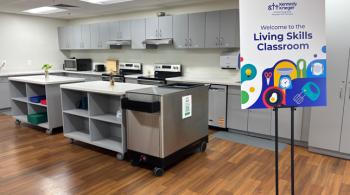
The Powder Mill Campus school, located in Prince George’s County, outside Washington, D.C., has provided life skills instruction for many years, but it wasn’t until the 2025–2026 school year that the school introduced a classroom that simulates an apartment space. The apartment includes a kitchen area with a stove, microwave, dishwasher, and refrigerator; a laundry area with a washer, dryer, and ironing station; and a sleeping area with a bed and wardrobe. Previously, the instruction in food preparation, cleaning, and other life skills was primarily delivered in a traditional classroom setting, which limited the students’ ability to physically practice their skills.
We see many students develop a sense of pride in their work ... .” – Bibiane Kanzler
Building Confidence
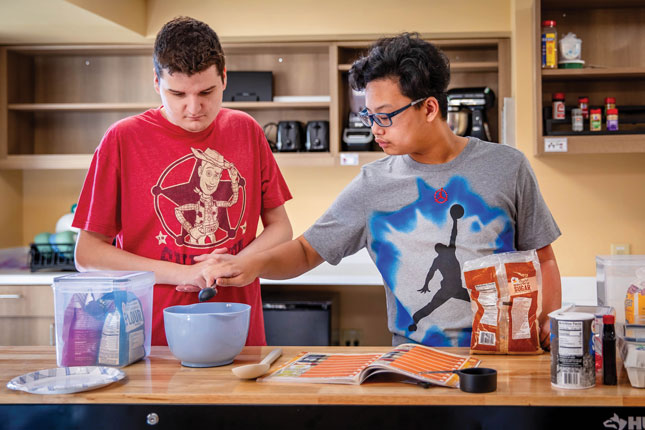
In Kennedy Krieger High School’s newly remodeled kitchen skills classroom, students practice skills such as following directions, solving problems, safety awareness through cooking, and meal preparation. The class also strengthens students’ motor skills and creates natural opportunities for social interaction with peers.
“Our kitchen skills classroom bridges the gap between academic instruction and everyday life, making learning both practical and purposeful,” says Lindsay Turwy, principal of Kennedy Krieger High School. “We recognize that cooking is far more than a household task—it’s a powerful way to build independence, confidence, and communication skills.”
The classrooms have been well received by both the students and their parents. “The parents are so excited when their child brings kitchen skills home, and they’re deeply encouraged by the capabilities their children have developed,” Turwy says.
Experiential Learning
By constructing alternative learning settings that help students stay engaged, Kennedy Krieger’s life and kitchen skills classrooms are models for other schools serving students with disabilities. These environments demonstrate how experiential learning can make skill development more meaningful and effective.
Funding for the Powder Mill Campus life skills classroom was provided, in part, by The Morris and Gwendolyn Cafritz Foundation, while the remodeling of the high school kitchen classroom was funded by the Orokawa Foundation and the Lois and Philip Macht Family Philanthropic Fund.
“As schools continue seeking innovative ways to prepare students for adulthood,” Kanzler adds, “programs like these show that realistic, hands-on instruction can play a critical role in fostering independence, confidence, and long-term success.”
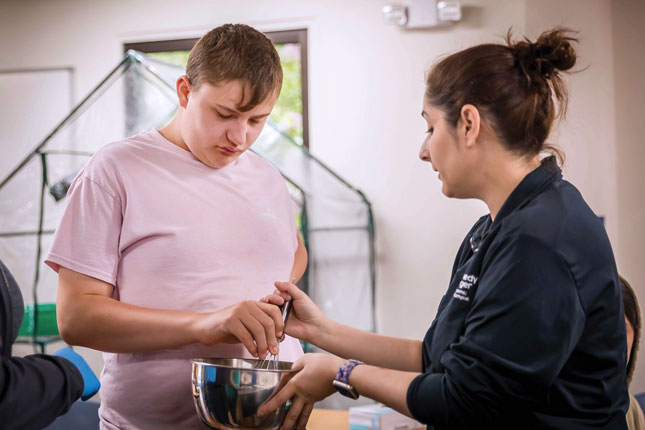
First photo: Serhan works with teacher Sara Josephson in the Powder Mill Campus school’s life skills classroom. Second photo: Brandon and Aiden work in Kennedy Krieger High School’s kitchen skills classroom.