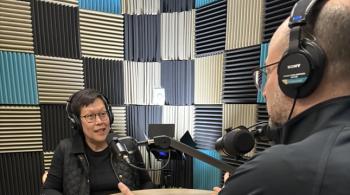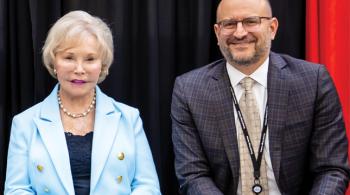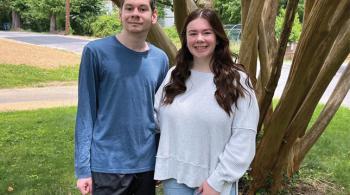
On this month’s episode of Your Child’s Brain, we mark the fifth anniversary of the podcast. Dr. Ali Fatemi, Kennedy Krieger’s chief medical officer, joins host Dr. Brad Schlaggar to celebrate and reflect on these past five years. More than 95 experts have appeared on the show to share information on a wide variety of topics, including autism, epilepsy, stroke, sickle cell disease, post-cancer recovery, mental health conditions, and more. They’ve talked about education, advocacy, research, and clinical care, and they’ve been joined by patients, students, and families, who have shared their perspectives, too. Tune in to hear this retrospective—and what’s on the horizon in the care and treatment of children with neurodevelopmental conditions.
Resources:
- Precision Neurorehabilitation: A.I., Wearables & Bespoke Clinical Care
- Rare Disease Diagnosis and Treatment
Learn More About Kennedy Krieger Faculty & Staff Members Featured in This Episode
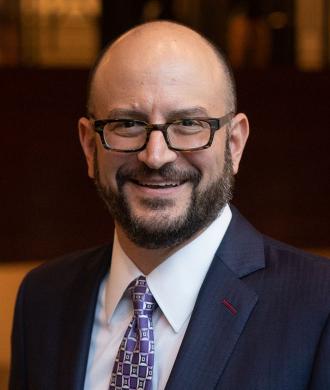
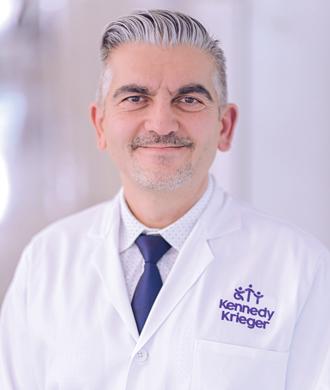
BS: Welcome to Your Child's Brain, a podcast series produced by Kennedy Krieger Institute with Assistance from WYPR. I'm Dr. Brad Schlaggar, pediatric neurologist, and President and CEO of Kennedy Krieger Institute. Five years ago, in July of 2021, we produced our first episode of Your Child's Brain in collaboration with WYPR, our media partner and an excellent neighbor here in our Baltimore community. The origin story of the podcast is that we wanted to build on a previous project, also with WYPR, where we shared stories that illuminated the mission and work of Kennedy Krieger, but we wanted a mechanism to go in deeper, sharing information by providing a forum for our expertise from clinicians, scientists, educators, and advocates. Importantly, we also wanted to highlight the perspectives and expertise of patients, students, and their families. Admittedly, Kennedy Krieger is not an easy place to describe in a short amount of time. Our mission is to improve the lives of children, youth, and adults who have been impacted by diagnoses or injuries that affect the nervous system that work encompasses patient care, research, and training of the next generation of clinicians, researchers, along with special education and community outreach. We treat common conditions like ADHD, anxiety, and autism, as well as rare conditions like acute flaccid myelitis, Rett syndrome, and the leukodystrophies. In a year's time, we see about 30,000 patients, and they come to us from all 50 states and even from around the world. Similarly, our special education efforts stretch across Maryland and DC, and our five schools are models for other schools across the nation. In so many ways, we are rooted to this community here in Maryland, but connected across the country through efforts to improve the lives of individuals with neurodevelopmental and related challenges. There's a lot there, and a podcast seems like a great place to start telling more of our story. That first episode was just over 17 minutes long, but it provided an excellent introduction to our work. Since that time, we've put out an episode every month, each month for a total of 60 episodes. We've had more than 95 clinical, scientific, educational, and policy experts on the podcast to share information on a wide variety of diagnoses, including autism, epilepsy, stroke, sickle cell disease, post-cancer recovery, mental health conditions, long COVID, Kabuki syndrome, and SYNGAP. We've highlighted adaptive sports and the athletes from recreational to elite who play them. Our conversations have included experts on navigating the complex world of entitlements and eligibility in school, community, and clinical settings. We've also covered a wide range of topics of great interest to parents and caregivers, including the lifelong impact of early childhood education and development programs and the evidence-based outcomes of the Chicago Parent program. Joining me for that first episode back in 2021 was my friend and colleague, Dr. Ali Fatemi, Chief Medical Officer at Kennedy Krieger, who is a pediatric neurologist, physician, scientist with expertise in rare neurogenetic diseases. Today, Ali joins me again in the studio as we reflect on the past five years of this podcast and think about where we want to go from here. Ali, welcome back, and we kicked off that first episode by sharing what got each of us interested in pediatric neurology and in being physician-scientists. Let's start this episode with a similar question. What inspires your work as a pediatric neurologist and neuroscientist these days?
AF: Thanks for having me back, Brad. I can't believe it's been five years already. If we talk about inspiration, what inspired me the most, I think there's two things, I want to say. The one is, I'm always been inspired by this most complex organ in the universe, which is our brain. UFOs aside, the brain is, as far as we know, the most complex organ. I always wanted to know how it works and how it develops, and I'm still learning, and I think I will die one day, still learning how it works, and not know exactly, but this is really a primary driver. The other inspiration is our patients, our families. Child neurology, or pediatric neurology, is a tough field. Our patients suffer from brain diseases that can be very difficult and devastating at times. What inspires me the most is the families of these children when I see them, because they do whatever it takes every single day to make sure that their child has the best possible life and quality of life. That's basically our mission. That's the Kennedy Krieger. We do everything we can to improve the quality of lives of children affected by neurologic disease. That's why I love this place. These are the two main drivers for what I do every day.
BS: As I mentioned, you're an expert in rare diseases, especially the leukodystrophies. Can you explain to our listeners what are those leukodystrophies, and how do they affect children and adults?
AF: Leukodystrophies are a group of rare diseases. It's actually a difficult term. Leuko means white, and dystrophin means wrong. These are essentially diseases that are genetic in nature, meaning there is a problem in one of the genes in our brain cells that will result in the brain's white matter to be affected. Now, what is the white matter? White matter is basically the aggregate of all the cables that are connecting our nerve cells with each other. We have billions of nerve cells in our brain, and they're all connected through wires that transmit signaling to each other through electricity. That electrical signal is insulated so that it can conduct fast through a layer of fat that we call myelin. These are basically genetic disorders of myelination. There are acquired disorders of myelination, like multiple sclerosis. But these are genetic diseases, and they are rare as an aggregate. Altogether, there is about one in 7,000 children that is affected by one of these diseases. We know of about 50 of them so far. Over the last decade or so, there has been a lot of efforts on the so-called precision medicine side that led us to discover all the different genes that are involved in these diseases. As of today, we know over 200 different genes where something can go wrong in them that can result in these leukodystrophies.
BS: You just said one in 7,000 children affected by one of these genetic forms of leukodystrophy, and that there are about 50 of them that we know about right now. If you just do the math, these are all very likely, exceedingly ultra-rare conditions. Just talk a bit about how hard it is to study such ultra-rare diseases.
AF: This is the main challenge we have in the field is that child neurology used to be about cerebral palsy and autism, and intellectual disability. These terms are still applying today because they're describing the patient's appearance on the outside. But now we have the technology where we can look into each cell and then look at the underlying hardware and see what has gone wrong there. We are identifying these abnormalities in these genes, and so it turns out there is many abnormal disease conditions that can result in autism or cerebral palsy, or intellectual disability. In fact, there are thousands of conditions. There is about seven or 8,000 at least rare diseases that we know of, at least half of them affect some part of the brain or the nervous system, and at least half of them or so also affect children primarily. They are predominantly more common in children than in adults. There are often severe conditions. It is challenging because unless you use advanced methods of trying to figure out what they exactly have, you may never find out an actual diagnosis, and that might hamper trying to do actual treatments targeting that condition.
BS: I think it's important also to point out how important the leukodystrophies, as a set of conditions are to the history of Kennedy Krieger Institute. I should have said, you're a professor of neurology and pediatrics at Johns Hopkins, as we both are. But you also hold the Blum-Moser chair in developmental neurology here at Kennedy Krieger. Blum named for the family that helped endow that chair. But Moser is Hugo Moser. If you could just take a minute to talk about Hugo Moser, the work that he and his wife, Ann, did and are still doing in terms of Ann at Kennedy Krieger, and how it inspired you into this pathway for your own career.
AF: First of all, it's a great honor to carry that name with me. Hugo Moser is a legend in child neurology. In fact, in the field of neurology and in the field of genetics, he made his career through discovering the very first underlying causes of intellectual disability. This is back in the 1960s. In fact, I think, his very first publication was in 1960, where he discovered the genetic etiology of a disease called metachromatic leukodystrophy, for which we have today gene therapy. This is just fast-forward, what is it? Eighty years or so from then. He later on partnered with his wife, and Moser Hugo passed away in 2007, but his wife is still here, an emerita professor at Hopkins, also, and she's still coming to the lab, and she's still the most experienced, I would say, person on Earth who knows about the lipid chemistry, the fats in the brain. That's really been the area that they both studied, which resulted in the discovery of several of these leukodystrophies, and then also later on in development of tests that we can do in babies so that we can identify these disease at birth.
BS: To that point, 50 years ago, in 1976, when Hugo and Ann first came to Baltimore, Hugo to be then the equivalent of the president and CEO of Kennedy Krieger at the Kennedy Institute at the time, that was when they first observed these abnormalities and fatty acids that became the signature of disease that led to the ability to do the newborn screening that you were referring to, and hugely consequential effect of the ability to do that screening, eventually, nowadays to make the diagnosis early and lead to life-changing interventions?
AF: That's correct. A lot actually has happened in the last few years in that regard.
BS: Let's talk about that. How has the field changed, and accordingly, how has your work changed in the past few years? Maybe the five years since the last time we sat together talking about what we wanted to do with this podcast. Five years have elapsed. What's different now
AF: In the leukodystrophy field, there has been major advances. For one, we now have two Food and Drug Administration, FDA, approved gene therapies for two different leukodastrophes. One was metachromatic leukodystrophy, which Hugo Moser described in 1960. The other is adrenoleukodystrophy, where Hugo Moser discovered the lipid abnormality in the brain together with Ann in the late '70s, early '80s. I don't remember the exact date when that happened. Now, fast forward, we have a methodology called gene therapy, where basically these patients are missing a particular gene, or there is a change in their gene that makes that gene not function in their body. What we can do is we can take the correct gene, put it in a virus that's not infectious anymore and not dangerous anymore to the patient, but can still disseminate the product, the gene, into the body, and that way treat the patients and basically give them the missing gene. These gene therapies are now approved for both conditions, one was in 2023, and one was last year in 2025. The important thing is though, that at this point, we can only use these therapies in children who don't have any symptoms yet. They work great, but they work only when you use them before the disease really kicks in. That is why we need to be able to target this population right at birth and identify the affected individuals at birth so that we can treat them timely. That was why we needed to have newborn screening. Newborn screening means basically a simple blood test. Usually, it's a few drops of blood that allow you to screen for a bunch of diseases that are treatable. With all these efforts that have been ongoing, we now have the Health and Human Services Secretary made recommendations for newborn screening for three different leukodystrophies. All of these have happened recently. The one disease that Hugo Moser worked the most on called adrenoleukodystrophy. There is now 47 states in the United States that are offering newborn screening, including the State of Maryland. We have a program here where we follow those kids right from birth and treat them as soon as we make sense for them.
BS: It's really remarkable. Just thinking back to my own training in the mid-'90s when I was in the child neurology residency training pathway, the idea that we would have such interventions that are so specific to get at the root cause of the disease it's remarkable. We are poised at this institute to be able to deliver those life-changing rare disease interventions. It's something to celebrate, and it has everything to do with the origin of the translational neuroscience principles that are at the root of Kennedy Krieger's history.
AF: That's very true. I'd like to ask you the same question. What has changed for you as the president and CEO of the Kennedy Krieger Institute?
BS: A lot. As you know, I used to run a research laboratory for about 20 years. I had a brain imaging laboratory and trained graduate students and residents, and junior faculty in that work. I love seeing the great work that those former students now that they're doing in academic institutions around the country. But I don't do that work anymore. I used to see a lot of patients. I hardly see patients anymore. But my time is filled with a lot of really wonderful things I do get to attend to. One of the really personally enriching aspects is the opportunity to have a much deeper appreciation of the entire array of research that goes into improving the lives of individuals with neurodevelopmental conditions. I recognize that previously, I had a more narrow purview because, I had to in order to stay at the top of my game in those research areas. But this position and the responsibility that comes with it has made it paramount for me to look across really the array of research and understanding how challenging it is to do excellent research in all these different spaces. Inclusive within neuroscience is but across the board in physical medicine and psychiatry in developmental pediatrics, in the physical and occupational therapy service lines, and audiology, etc, all of those spaces have really robust research programs that drive the field forward. That's been a remarkable experience. Also, the unique nature of Kennedy Krieger's mission that coalesces around individuals with no developmental challenges, but comes at it from clinical care and research, but also special education and early childhood and post-secondary programs, and community partnership that drives our ability to be in advocacy spaces. All of that has been just a truly remarkable and personally enriching, intellectually challenging, and enriching experience. Talk about the importance of having steep learning curves at different stages of your career. This is almost eight years, and this role for me now, I feel like it's just been a steep learning curve to learn all the different spaces, but also, I feel now, I think, I have a handle on the scope of the work of the institute and where we need to be from a strategic standpoint going forward.
AF: I'm glad to hear that. [LAUGHTER]
BS: We started this podcast in the midst of the global pandemic that I describe you as a physician scientist, but I also mentioned that you're a chief medical officer for the institute. Part of your role, and you were relatively new to that role in the 2020, 2021, as we were getting set to start this podcast in the summer of 2021, this global pandemic really changed the way we thought about delivering medical care, education, carrying out research, everything that we did, all of our daily activities. Are there lessons that you've taken away from that period that remain relevant to the care, the education, the research, all that we do at the institute, at this point?
AF: I think we all learned a lot of lessons out of the pandemic. When I signed up for the job in 2019, I did not anticipate that happening in 2020, so that wasn't part of the deal. But I would say perhaps the biggest lesson from a healthcare perspective that we really learned out of this pandemic is that we can provide high quality healthcare through telemedicine. Basically using the Internet as our partner has allowed us to be able to access patients that are far away remote locations where they don't access to expert care, and we can provide that expert care online through telehealth. This was something that technologically was totally available before the pandemic, but we were doing it on a miniscal scale, and then it rapidly ramped up and it became almost most of medicine for some time. Now, of course, it's changed over the last few years, but especially when it comes to mental health and behavioral health, that's been really important to have that as an approach to providing care to patients, especially for those with limited access to care. I think the other lesson is not the lesson learned, but more seeing the impact of the pandemic is this unfortunate rapid increase in the need for behavioral mental healthcare, especially in young children and individuals. It's gone with each other. Because on one hand, we have this methodology that allows us to provide care to more patients, but also the demand has gone up a lot. I think these are the two things that I would say are really the implications or the lessons learned from that.
BS: How about in the research realm? I know some of the work that you do in your team, there's the use of remote monitoring devices. Talk about how those tools, in general, for example, for rare disease research are beneficial, but how their use has been enhanced as a consequence of the tele technology, if you will.
AF: Yes, the reality is that we actually were doing tele research way before the pandemic. I had in my lab, a solid program where we were doing remote assessments of individuals using variable technology, like wristwatches, and we could monitor their gait and so on. The problem during the period prior to the pandemic was that the regulatory bodies were, the Food and Drug Administration, for example, that is supposed to approve a drug, would not approve it based on those type of metrics. They wanted in person assessments, and that rapidly changed through the pandemic. Now it's well accepted to have variable measures as one of your outcome measures when you do a clinical trial. I think that was a major improvement, certainly in the way people thought about it. I'm not sure if there was real dramatic change in the type of research that one can do technologically, but certainly a lot more people started using those new approaches to patients when it came to research.
BS: There's probably other advances in technology that have transformed in some cases the research we can do. In general, we've been talking about precision approaches to care that is based on, for example, using those remote devices, just the continuous collection of data, you have much more granular information to work with for a given individual. That information can be used for what we've been referring to as precision medicine including precision neuro rehabilitation, using data to better understand how to optimize delivery of individualized care and also, education, the ability to use a lot of data per an individual, talk about how that aspect has the potential to transform further the way we deliver care and study especially rare disease.
AF: Definitely. I see essentially two ways to see this in terms of precision medicine. On one hand, I think when we talk about precision medicine, we're talking about understanding exactly what is, on a molecular level, wrong with an individual so that we can fix that molecular problem. That is what we call first individualized medicine in the 2000s, and then it became precision medicine, the technology of diagnosing the individual genetic causes emerged now almost two decades ago. We've had that going on in the clinic for the last 10, 15 years. What is happening now in the last few years is that we now are moving from just diagnosing a patient with a condition to going precisely after that genetic defect. When I see a genetic change, we now have the technology where we can try to do an individualized treatment essentially you could think about it like a genetic surgery. In the old days, we used to do surgery and remove organs. Now we can do genetic engineering and cut out a particular part in the gene. That is still mostly on the research side, but it's rapidly coming up and it's really changing the way we can treat individuals, especially with the rare disease because these are typically genetic conditions. On the other hand, I think there is this large data effort that you were mentioning, so we have the advantage that machine learning tools and AI, basically artificial intelligence, what everybody talks about the real advantage is that it has the ability to recognize patterns that traditional statistical methods could not recognize. Now we can take a lot of data because it's easy to get data these days, and it's easy to store data these days, with all the data centers around. We can take, for example, all the data to try to predict the future. Now I give you a particular example. We see a lot of children with traumatic brain injury, when you have a child in the ICU that was just hit by a car and is very sick in the intensive care unit, parents want to know, will my child walk again? Will he talk again? What will be his academic ability in five years? How much therapy does he need? What physical therapy does he need? What occupational therapy does he need? A lot of that is a dark box, and we don't really know what the answer is. What we're hoping with this precision neural rehabilitation effort that is ongoing here at Kennedy Krieger. It's a big collaborative between Kennedy Krieger and Johns Hopkins. It's actually a funded effort through the federal government through the National Institute of Health, where we are digging in to very large electronic health record data that is already existing here for all the patients who have had, say, traumatic brain injury. Then using that data with these machine learning tools to try to exactly identify these risk factors and try to identify the future progression of an individual. The hope is that one day, we will have essentially a machine learning tool where based on the characteristics of that patient, it can tell you, yes, this child will benefit greatly if they have three sessions of physical therapy and this particular occupational therapy and so on. This is the future that I'm really looking forward to.
BS: Agreed. There's a lot to say there. Actually, the topic of precision or rehabilitation, we just recently had a, we do this roughly quarterly webinar series called Exploring the Brain and we just did it on the topic of precision or rehabilitation. I think we can put the link to that webinar on the page for this podcast episode so that people can click on that and have a look because we dive in deep on all the different ways that precision or rehabilitation is taking form at the institute supported by this pretty special program project grant that is funded, as you said, by the NIH. What other ways do you see the way that this precision approach, this individualized approach is taking form at Kennedy Krieger?
AF: Well, I think there is also a lot to be said about what we call computer vision, for example, which is really critical in the child neurology field. We now have the capability, again, with the help of AI to take a simple video of a patient somewhere remote in their homes, and that AI tool is able to analyze that. The hope is that, for example, we will be able to recognize a child with autism very early on, in an infantile phase, just by looking at their facial expressions, because there seems to be certain patterns that we may not be able to recognize as human, but the computer can. Then you basically have a screening tool for detecting autism very early before they really are getting a diagnosis of autism, so then you can start intervening and getting to make sure that they develop better, than waiting until they actually express the symptoms and are affected by the disease. Similar things can be done, for example, for Parkinson's disease, where you can take a video of a patient as a screening tool to try to see if they are prone to develop Parkinson's and potentially do interventions there before the symptoms actually emerge, so that's the theme that I see in the future is screening early diagnosis to try to prevent a chronic condition from actually starting to really exhibit symptoms rather than waiting until they have the symptoms and are affected.
BS: Absolutely. Because, as we know, for so many well argued evidence based regions, early intervention is the most impactful way to change a trajectory. You just made the case in terms of gene therapy for a leukodystrophy that in a very specific way. If the symptoms already manifest, the gene therapy is not going to unwind the damage that has happened, importance of getting out in front. I wanted to return to gene therapy. I think you talked about both the concept of gene replacement, but also gene editing. There are other ways, at least one other way I can think of where you can modulate gene activity. But just maybe take a moment to describe a little bit more detail how gene therapy works. There's editing, there's replacement, and there's turning on and off, so how does that work?
AF: We have different approaches. If the gene is not functioning well, it has less function, we call it loss of function. One approach is to try to replace that gene. Right now, the best way to do so is using viruses, so we use viruses that we inject either into the patients directly that carry the correct gene or we sometimes take, for example, bone marrow stem cells of a patient and fix the genetic problem there, treat those cells with the gene therapy and give those cells back to the patient. That's actually the proof treatment for the two leukodystrophies I mentioned. That's replacing, so it's gene replacement. The other strategy that has been emerging is to try to change the actual DNA letters that are inside our cells. That's a lot more challenging because we have billions of cells in our body, depending on which organ is affected, you may have to change the majority of those cells as DNA. While viruses are pretty good in doing that, they don't usually affect every single cell, so this will apply more in conditions where potentially correcting 10% of the cells might be sufficient or even sometimes 5% of the cells might be sufficient to not have the disease anymore or to at least lessen the burden of the disease. Those approaches are called gene editing. Then there is another approach that we now use, which is methodology where you're not using a virus, you're using a small molecule. Typically, they're called anti-sense oligonucleotides, so long word abbreviated as ASO, anti-sense, oligonucleotides. These are small pieces of nucleotides, DNA is a nucleotide. These are mirror pictures of the actual genetic abnormality. For example, you may have here is your DNA, and you may have a change in that DNA letter and you can block that abnormal DNA letter using this ASO, it basically goes in and blocks that one abnormal letter, so that when the cell is reading the gene information, it doesn't see that abnormality, then it expresses a normal. This has been going on also in clinical trials, and we in fact, have several treatments now approved, the so called ASO treatments, and they're effective. Some of the most devastating conditions, for example, spine and muscular atrophy, both you and I when we were trainees, we saw these kids die literally in the first year or two of life, and now we are seeing them survive, and they're walking and talking. It's just amazing how that field is changing so fast.
BS: Just a couple of months ago our guest on this podcast was Dr. Brenda Banwell, who is now the director of the Department of pediatrics at Johns Hopkins, a good friend and colleague, and we were talking about the changes that have happened in our lifetimes as child neurologists. That's one that really sticks out dramatically. I remember, as I mentioned, on that episode, I remember distinctly being in the audience for a grand rounds being delivered by Dr. Anne Connolly, who now leads child neurology at Nationwide Children's in Ohio. Talking about the outcome of the clinical trials and that was in 2017, and just the idea that children that we would have seen lose their lives are now in third or fourth grade. It's stunning. This is the first intervention for SMA and ASO intervention, so many other conditions are ripe for being treated with this an approach. Extremely exciting. Again, going back to the early to mid 90s, it was something we hoped for, but not that we were guaranteed, would see true natural history of disease changing therapies in our lifetimes.
AF: I have a question for you, Brad, so I remember during that first episode we did five years ago, we were discussing the lineup of all the topics and the guests that you were planning to have in the upcoming episodes. I said, that could take many years to cover all of that, so five years into it, what you see as an opportunity in front of us right now in terms of information sharing, what are the topics that our audience still needs to know about?
BS: Well, the easiest answer to that is just like we were talking about with five years hence, what's going on in the world of leukodystrophy, we could go back and check in with everybody and say, what's happened in the last five years or the last year because the field is so wonderfully evolving in our time. But I think where we are headed is towards deeper understanding of rare disease. I think one of the principal ideas is that, eventually, all disease, whether it's common or rare, we will have a rare disease sensibility as an approach to it, and that picks up on the same themes of precision medicine, bespoke therapies for a given individual, whether it's a common condition or not. I think topically, it will be our obligation to bring our listeners along for the ride as those technologies advance, and the ability to deliver truly precise approaches to care continues to improve. That's one direction. The other direction is, despite that, we know that we are seeing ever more increasing numbers of children with medical complex. Another topic that we have talked about on this podcast. The successes of acute pediatric care, over the decades, the decades that we've been involved in this field, have yielded increasing numbers of children with complex chronic conditions. At the same time that there will be opportunities to have really specific interventions, we also will have to understand how to optimize outcomes for children who are surviving previously non-survivable conditions. We will be obligated to bring our listeners along on that journey as we have a deeper understanding of those interventions. I also think that these same ideas are going to be more effectively applied in educational settings. You and I probably agree that seeing one of us two or three times a year, maybe more frequently for you in your clinic, as a child neurologist, that real action happens, not in our office, but it happens moment to moment in the school setting. Learning how to optimize the educational interventions for children with challenging to educate students, I think will be rich topic for the next five years of this show as well. Those are the areas that are very much on my mind, but I think we will be revisiting topics because, as I said, the field is evolving so wonderfully. Expecting that we will meet again in 2031 to celebrate another 60 episodes, what do you think will be the topics of discussion when we have that?
AF: First of all, hopefully, we don't have another pandemic in between. But that aside, I would really hope that in the next five years, we use these technologies that are emerging and are now becoming really available to us, like machine learning and advanced gene editing tools and so on, genetic engineering tools to do early diagnosis, prevention of symptoms, and having therapies that really allow children with a neurologic disease to live a life to the fullest extent. I just hope that that's going to happen more and more. It won't be complete in five years. It probably will take decades to get there, but we're making progress every single time.
BS: That is absolutely the case. Ali, I think that's a great place to end. I want to thank you for being here. Dr. Ali Fatemi for joining us today and for sharing your insights as we celebrate the fifth anniversary of this podcast. I hope that you our listeners have found today's discussion to be both interesting and informative, and that you'll share this podcast with your friends and family and rate us if you're so inclined. Please check out our entire library of topics on your child's brain at wypr.org kennedykriger.org/ycb or wherever you get your podcasts. You've been listening to Your Child's Brain. Child's Brain is produced by Kennedy Krieger Institute with assistance from WYPR and producer Mark Gunnery. Please join us next time as we examine the mysteries of Your Child's Brain.