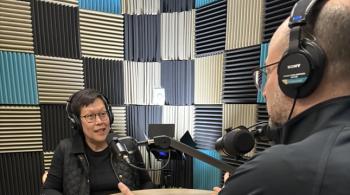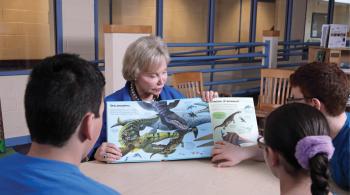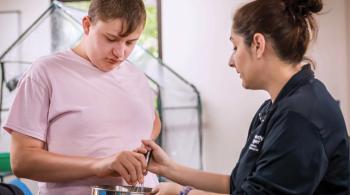
Raising a child with a disability is a journey marked by love, resilience, and hope — but it also brings complex challenges that can feel overwhelming. Parents are navigating unfamiliar systems, advocating fiercely for services, and making critical decisions — all without a roadmap. We are pleased to provide families with a new resource and roadmap. Join Dr. Brad Schlaggar, president and CEO of Kennedy Krieger Institute and his guests Dr. Mary Leppert and Maureen van Stone, as they discuss the Maryland Guide for Families of Children with Disabilities.
Resource:
Maryland Guide for Families of Children with Disabilities
Learn More About Kennedy Krieger Faculty & Staff Members Featured in This Episode
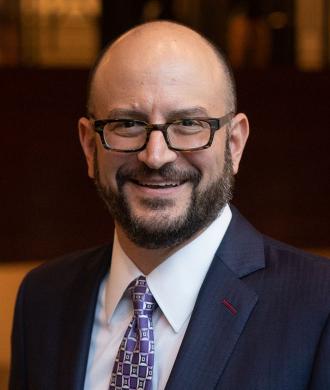
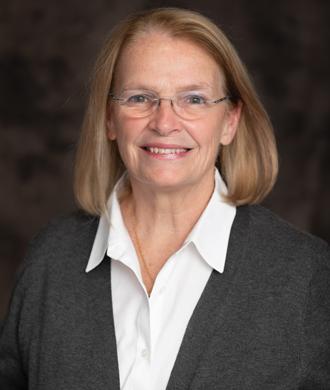
Mary L.
O'Connor Leppert
,
MB, BCH
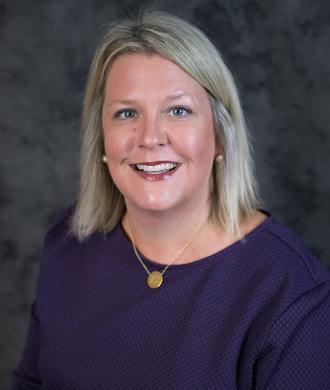
Maureen
van Stone
,
Esq., MS
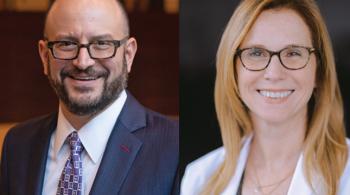
Dr. Brad Schlaggar (BS): Welcome to Your Child's Brain, a podcast series produced by Kennedy Krieger Institute with assistance from WYPR. I'm Dr. Brad Schlaggar, President and CEO of Kennedy Krieger Institute. Rising a child with a disability is a journey marked by love, resilience, and hope, but it also brings complex challenges that can feel overwhelming. For many families, the path begins with questions. Sometimes the questions are driven by concern about a specific diagnosis. Sometimes they're driven by a feeling that something is just different with their child's development. But from the moment a developmental disability is recognized, families are often thrust into a world of medical terms, therapy options, educational plans, health insurance systems, all while trying to understand the potential impact on their child's future. It's not just the information that's overwhelming, it's the lack of clear, accessible guidance. Parents are expected to become experts in neurology and special education law, in behavioral health and care coordination, often with little more than a stack of paperwork and a few referrals. While professionals may be doing their best, the reality is that many families are left to piece together answers on their own. Parents are navigating unfamiliar systems, advocating fiercely for services, and making critical decisions all without a roadmap, and that's not how it should be. Families shouldn't have to do this alone. Which is why this episode of Your Child's Brain is so important. We're proud to introduce the Maryland Guide for Families of children with disabilities, a comprehensive resource developed by Kennedy Krieger Institute with support from the Maryland Department of Health's Behavioral Health Administration. This guide was created to empower families to help them find clarity, connection, and confidence as they care for their children. In this episode, we'll describe how this guide can be a lifeline for those who need it most. We have my exceptional colleagues from Kennedy Krieger here with us to discuss this important topic that we hope will help ease the burdens for families and navigating this complicated process. They are Dr. Mary Leppert, a neurodevelopmental Pediatrician in the Department of Neurology and Developmental Medicine at Kennedy Krieger Institute, where she is, among many other roles, the chief editor of the Kennedy Krieger Instruction in neurodevelopmental disorders, the KIND Curriculum. Dr. Leppert is also an associate professor of pediatrics at the Johns Hopkins University School of Medicine. Also joining me is Maureen van Stone, an attorney, specializing in Special Education Law. She's an Assistant Vice President and Director of the Maryland Center of Developmental Disabilities at Kennedy Krieger, and founder of Project HEAL. HEAL stands for Health, Education, Advocacy, and Law. It's a medical-legal partnership. She also has a faculty appointment at the Johns Hopkins University Bloomberg School of Public Health. Welcome, Maureen and Mary. Mary, let's start with you. How would you describe how healthcare providers, teachers, and other professionals support families of children with disabilities?
Dr. Mary Leppert (ML): Well, thanks, Brad. I've been here at the Institute for a very long time and have been privileged to be with and a very large group of professionals that support families emotionally and with their expertise in many different aspects of the Institute. But in the last few years, I've really had the genuine privilege of working with community providers, educators, community, pediatricians, behavioral health workers on this project, we call Project ECHO, which is a training program for community providers. They are continually looking for more and more information for how to guide their families with children with disabilities through the medical and legal, and educational systems throughout the state. They're very hungry for this information, and it seems like it's a bottomless pit of work that we're doing to try to push information out there. But it was a few years ago that our staff started saying, Why are we giving this just through ECHO to disseminate, why not bring it directly to families? A year ago, the Maryland Behavioral Health Administration actually agreed with us and have supported us in making this guide. We've been very lucky there.
BS: What would you say are some of the most common challenges that families face when raising a child with a disability?
ML: Well, there are two answers to that. In some way, it depends on the child's age and the stage at which the family is going through. But the common things are to come to look for guidance on navigating the health care system and pointing people into the right directions for referrals and things like that, but also in helping them understand the limitations and the benefits of educational services and how to access them. But the other side of that, Brad, is that there's a lot of questions that families don't ask, but we feel the question in the room, or there's questions that they're not asking because they're not yet anticipating what might be coming up. I think that there is a combination of pragmatic information, and then some unasked information about social aspects of raising a child with disability or the legal concerns in the future of children with disabilities. Of course, we are in Maryland, and the majority of our patients and students that we serve come from Maryland. But of course, especially our patients come from all over the Mid Atlantic region, all over the country and beyond, are the challenges that we're referring to here, are they generally specific to Maryland, or are we talking about similar issues across the states, for example? By no means are these specific to Maryland families? In fact, we're learning from our echoes more broadly across the country that the same questions are coming up all across the US. And although the Maryland Guide is the Maryland Guide, and it contains information that's specific to Maryland with regards to some of the legal regulations or the educational regulations, probably 80% or more of this course is relevant to any family across the US with the child with a disability.
BS: Maureen, turning to you, how would you say these challenges differ across communities, especially thinking about underserved or rural areas? For example, why is it so difficult for some families to find and access the right services at the right time?
MVS: Thanks, Brad. In some of the underserved and rural parts of the state of Maryland, in particular, there are a lack of community-based providers to provide outpatient clinical services to children with disabilities. In some parts of our state, there is a lack of a continuum of placement options that's required by federal law, and there is definitely a lack of access to special education advocates and attorneys to help families navigate the special education process, whether it's entering school and receiving their first IEP or transitioning through high school. Families need a lot of support in those areas, and that's what this curriculum is designed to help with.
BS: So you just mentioned IEP, just unpack that, if you will.
MVS: Sure. Individualized Education Program. There's also a provision under the law that is for individual family service plans. The family service center for the younger kids, and then when they transition to school-based services, they will receive an IEP.
BS: Mary, what would you say are some of the barriers would be emotional, logistical, systemic, that prevent families from gaining access to the help that they need?
ML: I think the first barrier is probably just knowing where to look for information. I think information is a big barrier. Knowing where to look for information, knowing whether the information that you find you can trust or not, I think, is the first problem. But then access is, I think, our biggest problem. That access is a barrier because of distance. Most of the centers that take care of children with disabilities are urban centers. We're far distant from some of our rural counterparts? Our wait lists are long that's a barrier. Sometimes insurances are a big barrier to accessing care.
BS: Maureen, one of the other barriers that exist is the relatively complex and siloed systems that we have, the way the world is set up, that education is siloed separately from healthcare. Especially like at the governmental level, for example, how can professionals better support families in understanding and navigating those complex and siloed systems?
MVS: I think it's important that professionals educate themselves about these different systems, and a lot of clinicians don't even understand actually how these different siloed systems can work together. Educating themselves and then sharing resources like this curriculum with families, and while it's designed in the title, it has the word families, I think that these modules can be very helpful for professionals as well on a variety of topics that they may be unfamiliar with so to the extent that we can spread the word about the different topics and the modules that we've included in this curriculum? It can be a great resource for both professionals in the field as well as families who are working directly with their children.
BS: If we've talked about the guide, but we haven't talked about the guide yet. Mary, just describe what is the composition of the guide? Is it a bound pamphlet? Go through the organization of it and in doing so, answer, how does the guide for families of children with disabilities address the kinds of challenges that we've been talking about?
ML: It does sound like it should be a handbook or a pamphlet of some kind. It is not. The Maryland guide is an online access to a series of video-recorded modules, all of which are about 15-20 minutes in length and are just meant to give the most succinct presentation on topics relevant to families that we can. The guide is set up so that there are five different topics with subsets in each topic. The topics include health care, which includes like the diagnostic odyssey and having to receive a diagnosis, and health maintenance and mental health maintenance for individuals with disabilities. There's a section on the educational processes and benefits, and services that are available to children with disabilities in the state. There's a section on family considerations that really talks about what it's like to raise a child in the family setting and all the complications that that bring. Then there's a section on the legal and transition programs for those children who are leaving the educational system, which is an entitlement system, and moving into the eligibility system of adulthood. Then finally, we learned that as our experts were making these modules, as we call them for learning, that they were rich with resources, specific to the topics that were being delivered. We also pulled out all of those resources and really just have a resource center at the end of the curriculum that is pretty comprehensive for legal educational and family support.
BS: Maureen, Mary just mentioned, among the segments of the guide, talked about this transition period that goes from youth and entitlement to transition to adulthood and eligibility. Can you speak to why that particular segment is so consequential for families who are navigating the space?
MVS: Yes, absolutely. It's a really confusing process for families who are used to working directly with healthcare providers and educators in our local school systems to provide all the services and supports that the child with a disability needs, and they're entitled to under federal and state law and regulations. Then when they reach the age of majority, which in Maryland is 18 years old, there is a huge shift from this entitlement to services and supports to determining eligibility. One unique thing about this guide is that we address all the facets of that transition from entitlement to eligibility, whether it's transition planning through the IEP process, whether it's transitioning to adult supplemental security income benefits, whether it's transitioning to young adults with disabilities, being able to save money through able accounts, whether it's transitioning to clinical care and needing to develop an advanced directive, an advanced directive for mental health or a power of attorney for financial matters. This curriculum addresses all of these issues of the transition from entitlement to eligibility.
BS: Maureen, inside of the Institute, we have something that we refer to as the Resource Finder. It's this compendium of up-to-date information about resources broadly for individuals with neurodevelopmental issues and beyond, and it's available to anybody who wants to gain access to it. You don't have to be a patient or student of Kennedy Krieger to gain access to this resource finder. But my question is, what makes this guide different from other resources such as the Resource Finder, that are currently available for families?
MVS: For the resource center and other resources, they aren't necessarily fully vetted, and we can't really attest to what the resource is and whether or not it's appropriate for certain children and families. What we can say about this guide is, we have content experts in all of these areas, and there are a number of attorneys who develop these modules across Project HEAL and have contributed specifically to their areas of expertise in navigating. I think most of the resources that exist out there do not contain legal resources, and it isn't access to having an expert attorney being able to talk about some of these complex issues in a really understandable way. As Mary mentioned, these modules are 15-20 minutes, and it's taking a lot of dense information and packaging in a way that it will be easy for families to access the module when they need it. Not every family is going to need every module at various stages, and so they can access it when it's an issue that their child or adolescent is facing, and then they have access to this particular content area.
BS: Mary, the process of creating the guide included expertise, clinical, educational, legal, as Maureen was just referencing. But what other voices were included in its creation to represent the insights that come from people with lived experiences in disability?
ML: We were very fortunate. Maureen and I worked with a colleague Miya Asato, who runs our LEND Program here. That includes family as faculty, and we were very fortunate to have Dr. Asato arrange for some family members who contributed their own experience, their learned experience, and the emotional and logistical issues that they had along the way. We also had siblings of children with disability speak to what it was like to be raised in a family with a child with a disability. I think all in all, in addition to the expert faculty, we have expert families that are really brought a lot of flavor and nuance to the curriculum that I think is value to everybody.
BS: For both of you, as you were thinking about the creation of this guide, what kind of impacts did you hope the guide would have on families and caregivers? What was your expectation?
ML: As a clinician, and spending time with families with children with disabilities, learning that there were a lot of things that they did know were coming. Anticipating, like putting together resources that allowed them to anticipate challenges, to allow them to prepare for those challenges with the nuance. Maureen was talking about the fact that these expertise are spending 15 minutes really breaking it down. They bring nuance from experience that knows that there's some easier ways to do things or there's some more effective ways to do things that I think is valuable. Then finally, I think that my hope was that this would be a good resource to optimize their advocacy for their children.
MVS: That's a perfect segue, Mary. Brad, my response to your question is, really, I would hope that these modules and the resources that we've included in the repository at the end will help increase families knowledge of how to navigate these complex systems, as well as empower them to be their child's own best advocate through these different processes of development. I think one really important feature of this curriculum is that we're offering it to families at no cost. I think that is a huge benefit that families have access to all of this information at any time, and they don't have to subscribe or they don't have to pay for a subscription or anything like that. This is something that is offered, and many thanks to the state for its contributions, but I think it's a way that families can use it and then share it with other families in their communities.
BS: It's really important that the guide gets into the hands of families. Maureen, how can organizations and professionals help ensure that that happens, that the guide gets to those who need it most? What are we doing to help facilitate that process?
MVS: Well, one thing that I've been doing is sharing it with local educational agencies or school systems across the State of Maryland, specifically with the departments of Special Education and those local jurisdictions, as well as every single county in the State of Maryland has something called a Special Education Citizens Advisory Committee, which is open to all families raising children with disabilities in that local jurisdiction. Sharing the information regarding the guide with those SECACS, As well as other local support groups, particularly in those under-resourced areas of the state. I have been sharing it with a number of other statewide coalitions that are working on behalf of children with disabilities and their families. I think continuing to spread the word is going to be critically important, and making sure that school systems know that this resource exists for families is going to be really critically important.
BS: Mary, what would you say in terms of steps that we're taking to help ensure that this guide gets out to those who need it most?
ML: We are disseminating it to all of our patients for whom we think it's relevant. But we're also really talking it up in the ECHO programs for primary care practitioners across the state of Maryland. The Behavioral Health Administration has also made it available to their local behavioral health agencies across the state. I think there's a lot of effort.
BS: We were talking a moment ago about how it's easy to imagine that this guide is a bound book that you could hold in your hand or pamphlet. But one of the consequences of that approach to publishing is that you have to wait for the next edition to have all the updates. But this modular organization that's online, one of the virtues is the ability to update it and expand it pretty seamlessly. Mary, can you speak to that process? What are the next steps for expanding or updating to keep the guide as relevant, timely, and useful as possible?
ML: Yeah, sure. We will be continually updating the curriculum. We're bound to do that just by educational standards, but also just because the information changes so quickly. We will be looking at it at least once a year to make sure that we're giving the most up-to-date resources. But we're also hoping to get feedback from some of the people who have used the curriculum. If we're missing very important bits of information, we'd like to add that. We need the voices of the people that are accessing it to improve it and to update it continually.
BS: Mary, this guide is one way to help facilitate the building of stronger mechanisms of support for families. But more broadly, how can we continue to build stronger networks of support, both that are formal and informal, for families of individuals with disabilities?
ML: That's a really great question, and I think a timely one because we know that access to care is getting more and more difficult, I think. I think we have the obligation in formal settings, like in medical schools, and in things like our lend program, the leadership in education neurodevelopmental disorders to train the breadth of professionals that are working with children with disabilities through the lens of neurodevelopmental disabilities. But I also think that something that's sort of bordering between formal and informal are programs like Project ECHO, where we are working with community providers and helping them problem solve cases, but also always doing it through the lens of neurodevelopmental disabilities and the resources that are available for children. Informally, I think we really depend on the families supporting other families, and I think that may be the most effective way of building support for families.
BS: Maureen, the community made up of community members, broadly but educators, healthcare providers, we are all implicated in the need to create an ever more inclusive and accessible environment, especially making it possible for people with disabilities and their families to gain access to resources. What can we all do? What can community members broadly, all of us do to make sure that there's greater access to more inclusive and accessible resources?
MVS: I think it's important that information is translated into plain language for families so that it is not overly complicated, so that there's an easy way for them to understand it. I think ensuring translation in some of our communities that are non-English-speaking communities is critically important. I think creating accessible modules like we did with this curriculum, where it's really short modules that families can access any time, day or night in no particular order, I think it makes it really appealing to families. I think continuing to embrace those efforts across the board, and then most importantly, just sharing the information. There are lots of great resources in the state of Maryland, but it's really the information sharing piece that sometimes break down from the higher level at the State Department of Education to the local school system to the IEP table to the families. I think trying to break down some of those barriers and make information available is going to be critically important, particularly in navigating difficult spaces that the education system is currently facing.
BS: Maureen, sticking with you, there's an emerging literature that demonstrates that clinical providers, inclusive of physicians, really have superficial knowledge in general of the Americans with Disabilities Act, and other legislation that requires certain provision of services for individuals with disabilities. Can you speak to the importance of us doing better in training medical providers, whether it's physicians or other sorts of clinical providers in this area to deepen the knowledge in this space?
MVS: Yeah, I think, to your point, Brad, not a lot of physicians or clinical service providers really understand what is required by the Americans with Disabilities Act or Section 5 or 4 of the Rehabilitation Act of 1973, which is essentially an anti-discrimination statute, indicating that you can't discriminate on the basis of disability. And then, of course, the individuals with Disabilities Education Act. Those three federal statutes are critically important in serving children and families with disabilities. To the extent that medical curriculum can be developed so that clinicians are aware of and understanding of all three federal statute is really important. I think, to the extent that I can and others who are attorneys practicing in this space are pushing in and offering guest lectures at undergraduate institutions and graduate programs. Then I think also offering training opportunities for undergraduate graduate law students on really enhancing their ability to not only learn about these federal statutes, but what it means in translating into services that are being provided either in the clinical space or in the school setting.
BS: Yeah, Mary, I would say that reflecting on my own medical education, going back to the mid to late '80s and then training as a resident in the '90s, even in neurology, there really wasn't a focus on this aspect of the law, and our obligation as providers of clinical services to understand what the law says, How about your experience? What would you say?
ML: I think my experience is very similar. I think we need to carry the perspective that the law was developing during our training. It wasn't well established. We were all still as a nation getting accustomed to it. But I do want to say that the reason that we are aware now might be from the voices from the families, not from the laws themselves, and I can't stress enough how I think making that education a priority really needs to come from loud family voices saying, we need you to know more. It needs to be part of everyday training.
BS: I have to agree with you. I think my own sort of on the job education came primarily from the families that I was working with. I think that's an excellent point. For our last question, I think an important one, how can families get access to this guide?
ML: The guide is, as Maureen said free and available on our website. The KennedyKrieger.org website search kind for families or kind curriculum. It will come up either way. And invite you to have a look around on the course. It is, as Maureen said, something that isn't going to be relevant to every family at any given time. It's what we call a just-in-time resource. When you need it, we hope it's there for you.
BS: Well, and we'll post a link on the web page associated with this episode for people to be able to access that resource directly as well. And I think this is a great place to end. Thank you to our guests, Dr Mary Leppert and Maureen van Stone. We hope that you are listeners have found this discussion interesting and informative. Please check out our entire library of topics on your child's brain at wypr.org. KennedyKreiger.org/ycb or wherever you get your podcasts. You've been listening to Your Child's Brain. Your Child's Brain is produced by Kennedy Krieger Institute with assistance from WYPR and producer Mark Gunnery. Please join us next time as we examine the mysteries of your child's brain.