
By Dr. Bradley L. Schlaggar, MD, PhD, President and CEO
Historically, pediatric cancer care has, understandably, been focused on survival. Thanks to advances in oncological care, many more children with pediatric cancer are surviving and living longer than ever before. Increasingly attention is focused on survivorship---a concept that encompasses all aspects of life after cancer treatment has completed. But survivorship brings its own challenges, particularly for brain health, whether or not the cancer directly involves the brain. Cognitive changes such as difficulties with attention, processing speed, and executive functioning can emerge during treatment and persist long after it ends, shaping a child’s academic path, independence, and overall quality of life.
At Kennedy Krieger Institute, we collaborate with partners nationwide to help alter that trajectory.
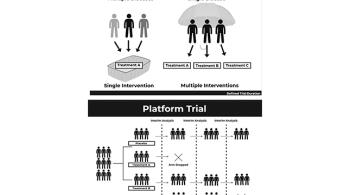
With a recent $5.5 million philanthropic investment, our researchers are launching a pioneering three-year neurorehabilitation program aimed at proactively safeguarding and improving brain health in children with brain tumors—from diagnosis through long-term survivorship. This initiative is based on an emerging field called pre-neurorehabilitation, which focuses on early, personalized interventions rather than waiting for cognitive problems to develop.
This work is led at Kennedy Krieger by Stacy Suskauer, MD, Vice President of Rehabilitation, and Rachel Peterson, PhD, ABPP, a pediatric neuropsychologist whose research focuses on the cognitive impact of cancer and cancer treatment. Together, they are advancing a care model that recognizes cognitive health as an essential part of comprehensive cancer treatment, not a downstream concern.
What makes this initiative especially powerful is the collaborative network behind it. The program is part of a broader philanthropic investment supporting a partnership anchored by the Johns Hopkins Pediatric Radiation Oncology Research Center at The Sidney Kimmel Comprehensive Cancer Center.
Researchers from Children’s National Hospital, Children’s Hospital of Philadelphia, and Massachusetts General Hospital are contributing to related research efforts, strengthening both the clinical and scientific foundation of the work. We are grateful to the Milken Institute Science Philanthropy Accelerator for Research and Collaboration for helping bring this multi-institutional effort together.
“This partnership formed with the goal of advancing care for children with brain tumors is incredibly exciting,” noted Dr. Suskauer when the program was announced in November 2025. “It reflects what makes Kennedy Krieger special and our commitment to building innovative partnerships with other world-class institutions.”
Children with brain tumors are frequently referred to Kennedy Krieger for neurorehabilitation services. This initiative allows us to connect more children earlier to the full rehabilitation continuum, expanding access to interdisciplinary care and identifying cognitive changes that are often invisible but deeply impactful.
As survival rates continue to improve, the question before us is not limited to whether a child survives, but also how well. By integrating brain health into care from the earliest stages, and by aligning philanthropy, research, and clinical expertise across institutions, we can redefine what survivorship looks like for children with brain tumors.
This powerful collaborative approach is what progress looks like when strong partnerships are formed and when we all commit to caring for the whole child, across the full arc of their journey.