By Laura Thornton
When it comes to surviving cancer, getting through treatment—be it surgery, chemotherapy, radiation or all three—is only part of the challenge.
A year or two after treatment, cancer survivors often face cognitive difficulties. Their brains can start to process information more slowly, making it harder for them to pay attention and understand what people are saying.
“The younger a person is, the more they are at risk,” explains Kennedy Krieger neuropsychologist Dr. Rachel Peterson. “That’s because their brain is still developing and more vulnerable to the effects of cancer treatment.”
For several years, Dr. Peterson and Dr. Stacy Suskauer, the Institute’s vice president of rehabilitation, have been looking at ways to reduce these cognitive challenges in pediatric cancer survivors, especially for those who have had brain cancer. “Just the brain tumor itself, applying pressure to the brain, can impact cognition,” explains Dr. Suskauer, who co-directs Kennedy Krieger’s Center for Brain Injury Recovery and Brain Injury Clinical Research Center.
But it wasn’t until last year that they were able to secure the resources needed to test a treatment protocol to stave off cognitive difficulties in pediatric cancer survivors. This study is now possible thanks to an anonymous $5.5-million donation to Kennedy Krieger.
That donation is part of a broader $40-million strategic philanthropic investment to establish the Johns Hopkins Pediatric Radiation Oncology Research Center. The family making the $5.5-million donation reached out to Dr. Matthew Ladra, director of pediatric radiation oncology at Johns Hopkins Medicine, to explore developing a research program aimed at improving outcomes for kids diagnosed with brain and central nervous system tumors. Dr. Ladra and his team joined forces with Dr. Peterson and Dr. Suskauer, as well as with researchers at Children’s National Hospital, to design a three-year research project, Strengthening in Oncology (STRONG): Brains and Bodies, aimed at reducing cognitive challenges in pediatric cancer survivors.
Thanks to the visionary philanthropy behind this investment, we have the opportunity to provide hope to families.” – Dr. Rachel Peterson
Dr. Peterson and Dr. Suskauer’s team evaluates patients’ cognition and prescribes brain challenges and physical activity to get patients’ brains and bodies in the best shape possible before radiation and chemotherapy. The kids continue the activities during and after treatment. Dr. Peterson and Dr. Suskauer plan to use bloodwork and brain imaging to look at changes in the brain after cancer treatment, and to determine how brain challenges and physical activities help minimize the treatments’ effects on the brain.
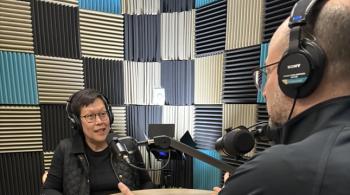
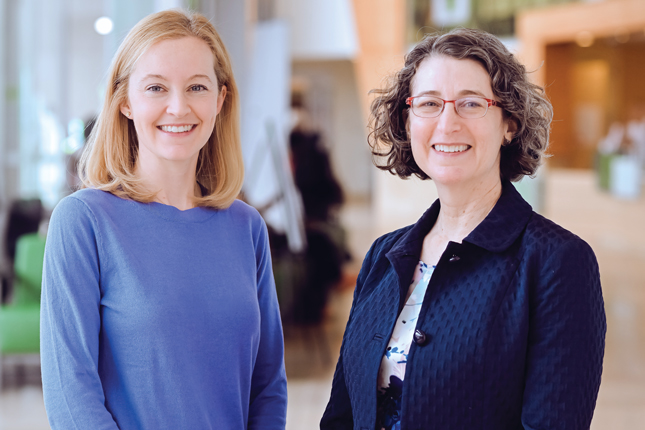
Photo caption: Dr. Rachel Peterson and Dr. Stacy Suskauer