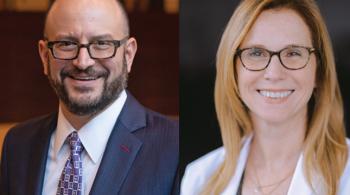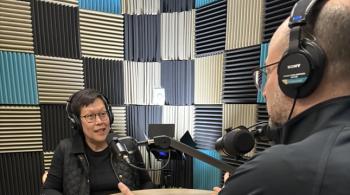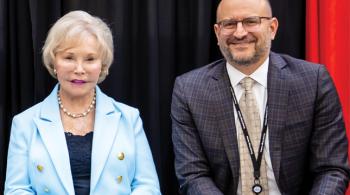
February is Rare Disease Month, a time to shine a bright light on the work that goes into identifying, treating, and, ultimately, finding the cures for rare diseases. Join Dr. Brad Schlaggar, president and CEO of Kennedy Krieger, as he discusses research around rare disease with Dr. Jacqueline Harris, a pediatric neurologist and an international leader in the study of Kabuki syndrome. Also on the show is Kimberly Maxfield, who shares her perspective as the parent of Noah, a preschooler with Kabuki syndrome.
Learn More About Kennedy Krieger Faculty & Staff Members Featured in This Episode
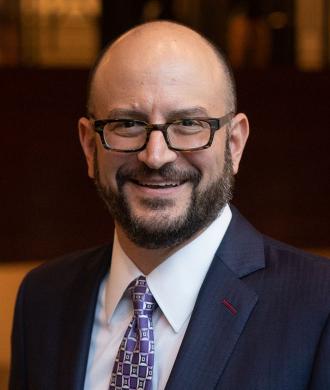
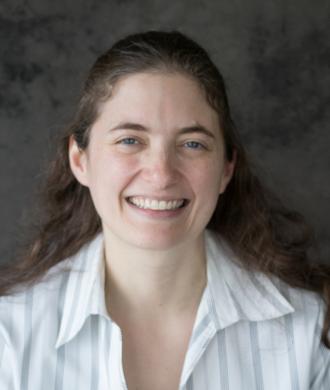
Dr. Brad Schlaggar (BS): Welcome to Your Child's Brain, a podcast series produced by Kennedy Krieger Institute with Assistance from WYPR. I'm Dr. Brad Schlaggar, pediatric neurologist and President and CEO of Kennedy Krieger Institute. If you're a regular listener, you know that February is a time when we acknowledge Rare Disease Month, which is recognized across the globe by hospitals, clinicians, researchers, patients, and families. For us at Kennedy Krieger Rare Disease Month is the time to shine an even brighter light on much of the work that goes into identifying, treating and ultimately finding the cures for these illnesses. Before we dive in, let's define what constitutes a rare disease. The most common definition used here in the United States is any disease that affects fewer than 200,000 people. If you do the math, considering there are about 340 million of us in the United States, a rare disease is one that affects fewer than one in 1,700 people. Altogether, there are now about 10,000 identified rare diseases that have been identified around the world, and that number continues to grow as roughly 200 new diseases are identified each year through discovery and improved diagnostic testing. In the United States alone, over 30 million of us roughly 10% have a rare disease. While having a particular rare disease is by definition rare, having any rare disease is common. Some important additional information to know for context is that over 80% of identified rare diseases have a genetic basis, about 70% become evident in childhood, and over half involve the nervous system. That's the brain, spinal cord nerves and muscle. Consequently, rare disease, especially rare neurogenetic disease is a critically important part of the work we do at Kennedy Krieger. On this episode of Your Child's Brain, we'll discuss Kabuki syndrome, a very rare epigenetic disorder with childhood onset with highly variable clinical presentation that affects multiple systems in the body, including the nervous system. Kabuki syndrome was first described in the medical literature 45 years ago, where the diagnosis was based strictly on clinical features. In recent years, the genetic basis has been discovered, and we know now that Kabuki syndrome affects about one in 32,000 children. Joining me today to talk about rare disease, focusing particularly on Kabuki syndrome, including recent advancements and understanding its causes and potential inroads to treatment is my exceptional colleague, Dr. Jacqueline Harris, a pediatric neurologist, neurodevelopmental specialist and physician scientist at Kennedy Krieger, as well as an associate professor in the Departments of Neurology, Pediatrics and Genetic Medicine at the Johns Hopkins University School of Medicine. Dr. Harris is an international leader in Kabuki syndrome and related rare neurogenetic disorders and also with us today is Kimberly Maxwell, mother of Noah, who is a very social preschooler who loves music, and who also happens to have Kabuki syndrome. Welcome, Jacqui and Kimberly and thank you for being here for this discussion today. Jacqui, let's start with you and before we dive into Kabuki syndrome, let's take a broader perspective. I offered in the introduction some framing of rare diseases, but as a physician scientist focused on rare neurodevelopmental disorders, what else would you add to set the table for our discussion today?
Dr. Jacqueline Harris (JH): Thank you so much for that. There's a few things. One is that rare disease, while it is rare, as you said, it is collectively common, and one rare disease is not necessarily isolated by itself. Oftentimes, there are other diseases that are similar or related to it that can provide a lot of insights from a research and scientific perspective, from a clinical perspective, as far as understanding what's to come, and also from a living with a rare disease perspective, connecting families and parents and patients themselves to understand more about their disorder and their community. In addition, rare disease sometimes provides us insights, by looking at one very specific disease, we can understand more broadly about neurodevelopmental disorders and how they work and what drives them.
BS: Also I mentioned that Kabuki is an epigenetic disease, whose genetic causes are largely known, but can you explain to our listeners what that means? What does epigenetic mean?
JH: Yes, epigenetic means that the consequences or the symptoms of having this disorder largely come from how this gene change because that's what genetic disorders are. They're a gene change, how this gene change affects many other genes, so that is epigenetic. In the case of Kabuki syndrome, the gene, there are two genes that cause Kabuki syndrome. We're talking today about the more common one, KMT2D, and what KMT2D does is it turns a bunch of other genes on and off and when that happens, it can affect many, many systems in the body and many different symptoms and disorders can arise because of it, both in the nervous system and the rest of the body. Epigenetic disorders mean it affects the function of other genes. We think about these epigenetic disorders in a special way for two reasons. One is that there are very specific potential treatment pathways that we can think about when we're talking about epigenetic disorders and the second is that this epigenetic dysregulation actually leads primarily to nervous system dysfunction, so that almost everyone with epigenetic disorders has nervous system dysfunction and neurodevelopmental disorders as a part of it, making it very important for neurodevelopmental disease in general.
BS: That's a great setup to talk about what Kabuki syndrome is in the way it clinically presents. What are the clinical features? Maybe you can also share with us why it's called Kabuki.
JH: Kabuki syndrome was originally, as you said, described 45 years ago in Japan and the physician, who was a very great geneticist and pediatrician who recently passed away, who described the disorder, actually thought that the facial features that come with Kabuki syndrome resembled Kabuki makeup and thought of it in sort of a more positive light than you may think of that, in that when the artists do Kabuki theater makeup, they do makeup that makes them have these very bold and striking eyes as part of this theater makeup, and individuals with Kabuki syndrome because of a number of features that come with the syndrome have these incredibly big, beautiful striking eyes and so this was originally described because it was thought to resemble that makeup. After that, we discovered the two genes that caused Kabuki syndrome and renamed them Kabuki syndrome Type 1 and Type 2, discovered that they are both epigenetic genes, as we were discussing, and it causes a number of things. All people with Kabuki syndrome have neurodevelopmental disorder that is characterized by low muscle tone, especially early in life. As well as cognitive impairment, and the cognitive impairment takes a specific form where they have very big difficulties in certain things like their visuospatial processing, but they are better at communication skills and their social skills are excellent. Those are the features of all people with Kabuki syndrome as far as the nervous system and then there can be a number of other variable features. Congenital heart disease, short stature, joint problems, problems with the endocrine system, including low glucose and what we call hypoglycemia, feeding issues, and a number of other things that can be associated.
BS: I'm thinking back, I can remember 30 years ago when I was in training that it was difficult to make a diagnosis of Kabuki syndrome, recognizing that we knew it was rare, of course, but also that it was known to have such a variable presentation. We didn't have diagnostic testing available to us. It was really strictly clinical diagnosis. Can you explain why it is that Kabuki and disorders like it are so variable. You started to down this path a bit, but some more about what makes the clinical feature so variable. Some things that are really consistent, but also a fair amount of variability.
JH: Absolutely and that actually gets back to that epigenetic disorder, part of things, where what this gene, KMT2D or KDM6A is the other gene does is turns on and off all these other genes and for some reason, that we are still trying to understand, a big part of our current research is trying to understand why and how, but we know that there's a certain set of genes that are likely to be turned on and off by these genes and we know there are some that are always turned on and off, like the ones that regulate the neurodevelopmental profile. But some of them are turned on or off in some people and not in other people with Kabuki syndrome based on these epigenetic mechanisms and understanding that will provide a huge amount of leverage to enable us to treat Kabuki syndrome, treat disorders like Kabuki syndrome, and also understand how did these processes occur in the first place? How does anybody get congenital heart disease? What are the epigenetic mechanisms that underlie all of that?
BS: As I listen to you, Jacqui, and I've heard you speak to your expertise so many times, I think it'd be great if you could just share a little bit about what led you down the path to study this particular disorder and sort of the family of disorders, these epigenetic disorders. What got you down that path?
JH: Absolutely. My great interest and love has and always has been cognitive impairment. I am really interested in what happens that makes some people's higher order brain functioning not work the way that we expect it to and then understanding that more, trying to help that, but also trying to then say, so if this is the reality, how do we then help these people to best function in society with what's going on with them? How do we both make that better and help them function with how it is? Kabuki syndrome, had a lot of work going on in the basic science space that was delving into better understanding how that transition happens between gene and epigenetic dysfunction and then brain dysfunction. That made me very interested. I then got involved with the community after I became interested in it from a scientific perspective and the community was so wonderful, and the kids and adults with Kabuki syndrome are so magical in their own specific ways. They're all individuals, just like all of us, but they have some things about them that are specific to Kabuki syndrome that make them unique and delightful and it was a wonderful community to be a part of and so that's how I got involved, and I've stayed with it throughout my career.
BS: Well, along those lines, thinking of cognitive and neurobehavioral aspects of Kabuki, you and your team have been working on assessment tools for that purpose. Can you tell us about that work?
JH: Absolutely. Something that has happened that listeners of this podcast may have heard before. Something that's happened as we advance towards trying to treat some of these genetic neurodevelopmental disabilities is that we've discovered that there are some unique challenges in order to be able to assess whether or not a treatment is working in what we call a clinical trial and that has to do with how we measure what is better. I wouldn't ever want to send Kimberly home with a treatment for Noah and call her up in a few weeks and say, so is he better? What does that mean? How do we measure that? How do we understand that? We're also discovering that if we don't have these tools or assessment measures that are very specific to the syndrome or group of syndromes that we're studying that we're likely to miss the mark and possibly deny families treatments that could be helpful for these patients. We want to do a really good job doing what we call clinical trial readiness, which is all of the science that goes into how are we going to do a good clinical trial. There are people working on what treatments are we going to use, and that's incredibly important, but none of those treatments do any good if we don't know how to measure whether or not they work and so my goal is to not have any clinical trials in Kabuki syndrome ever happen without us being able to say at the end of testing this therapy, does it work or does it not work? If it doesn't work, that's fine. We move on to other therapies, but we want to know with certainty that the result that we got was the correct one.
BS: Kimberly, I'd like to turn to you now and learn more about you and your son, Noah. What would you like to share about Noah?
Kimberly Maxwell (KM): Thanks for having me. Yeah. Since this podcast is about rare diseases, I'll start there with Noah. A big piece of Noah is that he has a genetic mutation that causes what we have labeled as Kabuki syndrome, and because of that mutation, he's had a very bumpy life medically. This morning, I went and looked at the National Institutes of Health Rare Disease page for Kabuki syndrome, which lists 89 symptoms or associated conditions. I just very informally went through and counted how many we've had to deal with, and I counted 40 and this includes a lot of what Jacqui just talked about, congenital heart disease, which was partially corrected by open heart surgery. He was born without an anus. He's immune compromise, he has feeding intolerance, just to name a few. He just turned four, about a week ago. He is not walking, he is not talking, and he is not potty trained. I spend a huge amount of time managing his care, and he spends a lot of time being poked and prodded in doctor's appointments, blood draws, compounding pharmacies, home nursing, habilitation therapies. I want to be honest, trying to wrangle a fragmented health system that's not built for someone like Noah pretty regularly brings me to tears, and all of these things would not be part of his life or my life if he did not have Kabuki. But although I just everything that I just listed, under the umbrella of Kabuki and or as a direct consequence of Kabuki are not the most important parts of him. He is exactly who he's supposed to be, and he is thriving. He's extremely social. He's outgoing, he is charismatic. He brings people together in a way I have never seen. He's almost universally loved, for example, at his pediatrician's office, when a medical aid or nurse comes out to call a different patient and sees Noah. They yell back, hey, Noah is here and like a whole like herd of nurses come out to say hi to him and that happens regularly. Saying he loves music is an understatement. Music speaks to his soul is the way I would say it and he's had some recent communication advances that has allowed me to figure out that his favorite era of classical music is baroque. As I just said, Noah turned four about a week ago and his favorite movie is Moana and our favorite, me and his favorite song to sing together is the Song of the Ancestors, like I am Moana. For his birthday, my extended family without my knowledge, this was a surprise, rewrote the lyrics to be, I am Noah, and then recorded it. They sang it, recording it, and we then listened to it on repeat, Noah's request. Noah is a person who can inspire a group of adults to voluntarily get together and sing children's songs.
BS: It's beautiful. Thank you for sharing all of that. Can you take us back to when and how Noah was diagnosed?
KM: Yeah. During my 20-week anatomy ultrascan during pregnancy, a question came up about one of Noah's bowel loops. It was one of those scenarios where they weren't sure. Starting there for the next six weeks, there was a flurry of imaging and genetic testing, and we were referred out to specialists. We did additional testing beyond what was done in our first trimester, where we got to the point where Noah had several small anatomical defects that included a heart defect, so we knew he had a heart defect in utero, and that would need open heart surgery, but we had no information about a genetic cause. Noah was premature. He was born six weeks early, and it was pretty harrowing for everybody involved. As far as I can deduce, our high-risk OB had a hunch that maybe we should test for Kabuki. She had just had another family about a year and a half before us, whose daughter ended up having Kabuki. They sent off a genetic test right after he was born, and we got the results when he was seven weeks old that confirmed the mutation.
BS: I'm wondering, before your experience or exposure to this concept of rare neurogenetic disease, through your experience with your son, was this a new pathway entirely, or did you have some background?
KM: Academically, yes, I did. I'm a pharmacologist by training, so I have a fair amount of biomedical background. I had never heard of the word Kabuki or Kabuki syndrome, but I understood the genetic tests we were doing, why we were doing them, what a result from one of those tests could mean. We ended up stopping some of the genetic testing because at one point, we realized it wasn't going to change anything. We actually didn't do full, extensive genetic testing. The answer is, yes, I did have some academic awareness, but I do want to note that although I did have knowledge and was able to have pretty informed conversations with his medical team. It did not prepare me for the journey that he and I are on.
BS: Have you been able to connect with other families or family groups around Kabuki or related conditions? What's that experience been like?
KM: Yeah, so I have been able to connect with other families to varying degrees of success and to put a little context around it until Noah turned three. It's about this time last year. We were essentially running from one acute medical emergency to another and then subsequently filing health insurance appeals. We had very little bandwidth for beyond eat, sleep. Don't get fired. Make sure Noah is okay. I've learned part in part with seeing Jacqui that that's actually pretty common for families with littles with Kabuki. There's this acute medical phase, and that basically you're so obsessed. In that space, there isn't a lot of extra room. Successful weeks we're like, I took a shower every day, like, hurray. I did the best I could to get him out there as much as possible, library story time. We're part of this group call Casey Cares, that gives us tickets to museums and stuff. I stuck him in the backpack, and we went down to DC to the Folk Light Festival. But it was a lot of it was me and Noah and Noah's dad, because he's immunocompromised, being around other kids was hard. This last year is really when we've been able to start asking different questions. Where can I take Noah to make friends? Where are some other families that we can connect with? What activities would Noah enjoy doing? His preschool teacher actually asked me the other day, other than music, because everyone knows he's music, what does Noah like to do? I really didn't have a good answer. One of our goals this year is to really broaden Noah's community with other friends and family.
BS: When you think about this. We talked about Jacqui's speaking to clinical trial readiness, for example, and other kinds of research approaches. When you think about these research efforts towards Kabuki syndrome, what do you hope for? What is your hope for that research outcomes?
KM: The obvious answer is to stabilize or restabilize funding, [LAUGHTER] particularly for the research that Jacqui is doing. She did a great job explaining that although the biology for Kabuki is under Kabuki syndrome, there are a lot of pieces of the biology that I think would inform related conditions far beyond Kabuki syndrome. That's the obvious answer. Another answer I would have is a little bit less Kabuki-specific. It's more about lowering the investment costs for pharmaceutical companies to actually develop therapeutics for rare diseases. I know a lot of patient advocacy groups are trying to set up their own patient registries and set up natural history studies or understand the progression of the disease in a way that could be leveraged for a clinical study. How to do that in a way that a pharmaceutical company could really leverage and use as part of their development program is not obvious. These groups need guidance, and I would love to see more public-private partnerships around that because I think that would really lower the activation energy for the investments for some of these therapeutics. The last, again, isn't necessarily Kabuki-specific, but it's about clinical management of medical complexity. As was mentioned, multiple times already, although any one rare disease is rare, but collectively, they're not, and having medically complex kids engaging in daycare and pre-K, inclusive programming, I would love there to be more research policy work program evaluations on how to increase that access, or for example, like complex care teams, which are relatively new at certain hospitals, are those teams actually saving money, creating better outcomes? Just making that piece of the clinical management of someone with medical complexity a little bit easier and more informed.
BS: Kimberly, each of those points you raised by themselves would be grist for an entire episode for this podcast. I can tell you that the medical complexity topic is on my mind and that we are planning on one for that specific purpose, just as you laid out. Then this issue of lowering the activation energy for pharmaceutical development around rare diseases, it is so key and I hope, as you hope, that there are mechanisms in front of us for making that happen, public-private partnership. Those are all great points and highly motivating for future exploration. Jacqui, Kimberly's first point was around the connectedness of studying a given rare disease to other rare diseases, and you started to speak to that as well earlier on. But maybe expound on that a bit more. Why is it that when you study one rare disease, it can be helpful to generalize to other rare diseases?
KM: For several reasons. One very broad reason is just sometimes a rare disease, even if it's very rare, can give you a window because you have a specific mechanism. You have a specific gene variant or gene mutation that you know is leading to a very specific phenotype or symptom presentation, and understanding that relationship can actually lead us to better understand what's happening in the brain in things that are far more common, like other neurodevelopmental disorders, ADHD, autism, intellectual disability broadly. That's number 1, and then number 2, when you're thinking about grouping of rare diseases, which is another thing that's been brought up. For example, epigenetic disorders, which is what I study, a lot of these different rare disorders, although they have individualized symptoms, they share epigenetic mechanisms. They share the same pathways of turning genes on and off. Some of those make them also have overlapping symptoms. On the topic that we were just talking about, of increasing the kinetic energy towards getting clinical trials actually in motion for some of these rare diseases, while one rare disease or rare epigenetic disorder in my case may not be very appealing to a pharmaceutical company because of the numbers. Well, if I can say, "Look, I've got five of them, and they all share these same mechanisms that could be treated with the same treatment." They all have the same symptom or outcome that we could look at for improvement, maybe that's a lot more appealing. That's a lot more patients that we can service at once and make it more financially attractive.
BS: Jacqui, I mentioned earlier that every year we have hundreds of new rare diseases identified, no exaggeration. Hundreds of new ones in a year. Can you speak to how that happens? Is there an upper limit on the number of diseases to be discovered?
JH: I'm not sure that there's an upper limit on the number of diseases because how this happens, how there are hundreds new every year, is that we're always refining the diagnostic categories, and we're refining the diagnostic categories both from the idea of clinical diagnoses, as well as genetic diagnoses. There are different ways that you can make a diagnosis. You can have a clinical diagnosis where you look at a group of symptoms that tend to go together and say, "Okay, this person has X disease, because they check this number of boxes on the symptoms." Then there's a genetic diagnosis, for example, where you say, "Okay, this person has X disease, because we've run this gene test, and we found they have a change or a variant in this specific gene that is associated with it." But oftentimes what we find is that we have clustered things together into one diagnostic umbrella that actually don't belong together. They're actually multiple different things. Just to give you two examples that are relevant. One is, there's another epigenetic disorder that's related to Kabuki syndrome. It's called Rubinstein-Taybi syndrome, and it's been described for much longer than Kabuki syndrome or some of the other cousin disorders, and it was described clinically. I can't tell you how many times I have been to a Rubinstein-Taybi conference and diagnose somebody and confirm this diagnosis later in clinic with Kabuki syndrome or Wiedemann-Steiner syndrome or one of these other epigenetic disorders because they got classified under one umbrella, and there was all of these people with Rubinstein-Taybi. But as we discovered more, we said, no, no, they have all of these other things instead. So that's a clinical example. A genetic example is the gene that causes Kabuki syndrome Type 1 that Noah has, the change in that causes his Kabuki syndrome, is called KMT2D. Very recently, in the past five years, it was discovered that actually, if you have a change in actually two very specific exxons or coding parts of KMT2D, that actually you get a whole different disorder that is different than Kabuki syndrome, and that has its own name. This is happening constantly. Just by the process of lumping and splitting and lumping and splitting, there's always going to be advancements and new rare diseases being described and diagnosed.
BS: Last question for you, Jacqui, what do you find to be the most promising, exciting research directions for Kabuki syndrome and its cousin disorders?
JH: I am biased to study. But what I would say is that we are making a lot of advancements, and I want to shout out that the reason that we're making these advancements is because of very close partnership with the community. In Kabuki syndrome, we try really hard to not just talk the talk, but really walk the walk as far as patient engagement from the beginning. We are not designing studies and then bringing the patient groups in and say, "What do you think about this study we've already designed?" We are from the very beginning, saying what's important to you, community? What would you like us to look at? Do you have any feedback on all of this design and doing it together? What that is allowing us to advance in is bringing larger groups of patients with Kabuki syndrome together. Capturing all of that variability that we're talking about earlier, and saying, "Why are these differences present? Is it an epigenetic mechanism? Is it a brain mechanism? Is it a combination of the two? What's making these differences?" What that allows us to do is so many things. That allows us to make better treatment trials. We can actually target specific things once we find out what's causing this symptom variability. Target these with treatments and/or say, "Okay, we've got multiple treatments in the pipeline. This one is better for this person with Kabuki syndrome. This one is better for this person with Kabuki syndrome." It allows us to develop what we call biomarkers, which help us be more successful in a clinical trial and give us that precision in deciding who should get what. Even in the short term, it allows us to counsel families better. It allows us to say from seven weeks old when Noah got the diagnosis, hopefully, it will allow us to say, "Kimberly, we think Noah is going to face this, this, and this as a part of his Kabuki syndrome, but not this." This is one thing you could put out of your mind and not worry about. But let's go ahead and focus on these other things so that the journey is not so catastrophic. I think we're really moving forward in that and looking at treatments and precision medicine and beyond in Kabuki syndrome and its cousin disorders.
BS: Well, I think that's a great place to end. I want to thank our guests, Dr. Jacqueline Harris and Noah's mom, Ms. Kimberly Maxwell, for joining us today. I hope our listeners have found today's discussion to be both interesting and informative, and that you'll share this podcast with your friends and family and rate us if you're so inclined. Please check out our entire library of topics on your child's brain at wypr.org, KennedyKrieger.org/ycb, or wherever you get your podcasts. You've been listening to Your Child's Brain. Your Child's Brain is produced by Kennedy Krieger Institute with assistance from WYPR and producer Mark Gunnery. Please join us next time as we examine the mysteries of your child's brain.