A recently published study from Kennedy Krieger Institute highlights major progress in identifying biomarkers for Sturge-Weber syndrome (SWS).
Biomarkers are observable—often measurable—signs in the body that can indicate a person has a certain condition. Clinicians can use SWS biomarkers to diagnose and treat SWS, a rare neurological disorder that can lead to seizures, stroke-like episodes, developmental delays and lifelong disability.
The study draws on 25 years of research to explore how MRI scans, EEGs, and even urine and blood tests can help detect SWS before seizures begin. Most children with SWS experience seizures in the first year of life, often followed by strokes, cognitive delays and motor impairments.
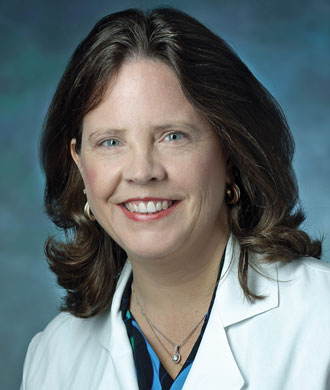
“We’re now at a point where we can begin predicting who is most at risk, even before the first seizure,” says Anne Comi, MD, senior author of the study and director of the Hunter Nelson Sturge-Weber Syndrome Center at Kennedy Krieger. “This opens the door to starting treatment earlier. It could change the entire trajectory of a child’s development.”
The biomarkers can also help monitor disease progression, predict outcomes and guide individualized treatment plans, Dr. Comi adds.
Key takeaways from the study include:
- MRI and EEG scans can detect early brain changes and predict seizure risk in infants.
- A specialized laterality score identifies which children are most likely to benefit from treatment.
- Increasingly, urine and blood-based markers of abnormal blood vessel growth are being used as noninvasive tools.
- AI tools are being developed to combine imaging and clinical data to improve diagnosis and risk prediction in newborns.
Visit our website to learn more about SWS and SWS research at Kennedy Krieger.