By Lauren Padilla
Twenty-nine years of service to anything is impressive. But 29 years of service as a therapeutic foster care parent is incredible.
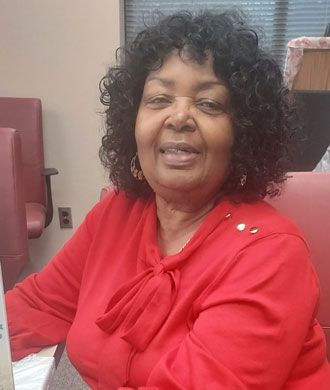
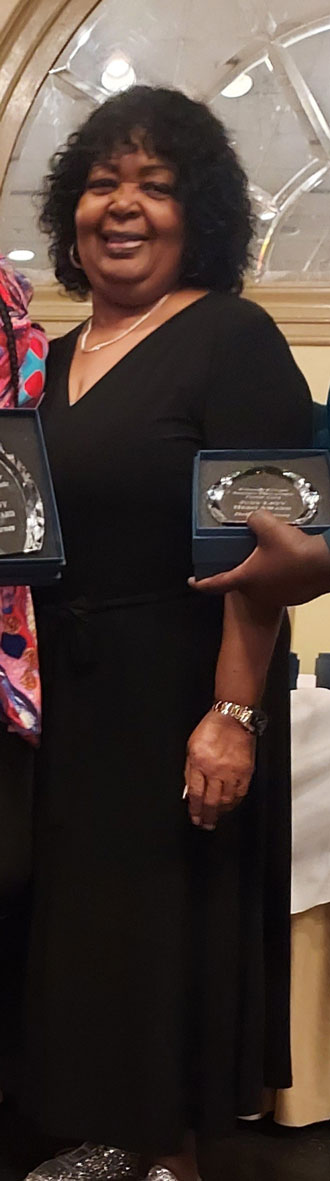
Deborah Barnes, affectionately known as “Ms. Debbie,” has been a vital part of Kennedy Krieger’s Therapeutic Foster Care (TFC) program for 29 years. A veteran TFC foster parent, she’s opened her home to provide care and support to many children with developmental disabilities. Though each child has come to Ms. Debbie with a different story, background and personality, they have all shared a common need.
“They need someone to show them that they can be loved,” she says.
Going From TV to Reality
Ms. Debbie’s journey to foster care all started with a familiar, yet unexpected, source: the family’s TV. Her daughter, who was 9 years old at the time, was watching an episode of “Wednesday’s Child,” a special segment spotlighting children in foster care. She’d been asking Ms. Debbie for a sister for some time, and she pleaded with her mother to consider the program. Ms. Debbie said she’d look into it.
“I had just lost my husband,” Ms. Debbie explains. “There were a lot of things I had to do, changes I had to make in my own life, before I could take on another child.”
But about one year later, Ms. Debbie took the leap. A cousin of hers who had been working at Kennedy Krieger mentioned the Institute’s foster care program, and Ms. Debbie attended an information session. While there, she noticed a particular need for families who were interested in fostering little boys.
“I think I can help them,” Ms. Debbie recalls saying. “Over the years, I’ve fostered about eight or nine boys, and most of them, they come back.”
Finding Forever Family
To Ms. Debbie, being a foster parent is more than a temporary role; it’s the start of a lasting connection.
“Once they become your family, they will always be your family,” Ms. Debbie says.
She has stayed in touch with many of her former foster children, even as they’ve grown. Kwanmay, Ms. Debbie’s fourth foster child, is now in his early 30s. He and Ms. Debbie still check in regularly—chatting about work, school and his interest in art and writing.
She’s also experienced some unexpected reunions. One of her foster sons, now 21, recently knocked on her door to say hello. Ms. Debbie hadn’t seen him since he’d left her home as a 12-year-old boy. “You never forget a good home,” he says.
Witnessing the impact she’s had on her foster children’s lives has provided a continuous source of meaning and purpose for Ms. Debbie.
“I feel good about that. They haven’t forgotten me,” she says. “I did what I was supposed to do to help somebody. That’s truly a blessing for me.”
Building Strong Foundations
Faith, routines and community were all pillars Ms. Debbie leaned on when raising her foster children. Together, she emphasizes, they helped to infuse their lives with structure and support.
“I kept them busy. I kept them in sports. I kept them in church,” Ms. Debbie says. “And they really thrived on that because they were busy. They had something to do.”
She taught all her foster children to cook and clean, and she expected them to keep up with school and regular chores. But Ms. Debbie also made sure they had time for fun activities—whether that was movies, Boy Scouts (known since 2025 as Scouting America) or art.
Facing Challenges and Stigma
Ms. Debbie mentions that while serving as a therapeutic foster parent has been rewarding, it has also come with many challenges.
“I tell the parents when they come into the agency that this is not like regular foster care,” she says. “These kids have been through so much.”
Many of Ms. Debbie’s former foster children had endured serious trauma or neglect. They’d tell her about being hit by adults around them or watching their parents use drugs.
“A lot of these kids don’t know what real family is,” Ms. Debbie says. She recalls the moment when one of her foster sons, who was born on Christmas Day, asked to visit his biological mother on his 16th birthday. He ended up asking Ms. Debbie to come and pick him up after his biological family forgot his birthday. Meanwhile, Ms. Debbie’s whole family gave him presents.
“You don’t have to be blood, but they can be your family,” she says.
Still, Ms. Debbie acknowledges that her family had hesitations about her choice to become a foster parent, especially when she first started with the program. When she sat down with them to discuss her plans, some of her family members expressed concerns that the foster children might harm her.
“There’s some stigma about foster kids,” she says.
However, she stresses that her family’s opinions changed when they met her first foster son.
“They were really surprised,” she says. “They said, ‘Now he’s just a little boy.’ And I said, ‘Exactly. He just needs a home.’”
Prioritizing Training and Support
While a lot has shifted since Ms. Debbie began her journey with Kennedy Krieger’s TFC program, the support it offers foster parents is something that’s consistently stood out to her. She mentions that in addition to the formal training the program provides, many of the foster parents talk on the phone, exchanging ideas and encouraging each other, supplementing the help they already receive from the TFC staff.
The in-depth matching process is something else that Ms. Debbie particularly appreciated about the TFC program at Kennedy Krieger.
“They’ll try to find that type of child that you’re looking for,” Ms. Debbie explains.
Learning That Never Ends
Over her decades spent as a TFC parent, Ms. Debbie has worked with all different types of children. Still, according to her, there is always so much to learn. Most recently, she became the foster parent of a toddler who has autism. Previously, Ms. Debbie worked mostly with school-aged boys and teenagers.
“This is new for me, but I’m trying,” she says.
Yet when it comes to building a connection with her current foster son, Ms. Debbie has taken the same approach she’s used with all her foster children: taking the time to understand them as a person.
“Sometimes what you see is not what you get,” she says. “Once you get the kids in your home, that’s when you learn a lot of things.”
Continuing a Cycle of Service
Twenty-nine years of experience has given Ms. Debbie valuable insights into navigating therapeutic foster care, knowledge she does her best to share—not only with families currently in the program, but those beyond it.
“After every meeting, I say, ‘Look, take my number. If you have any questions, if I don’t know the answer, believe me, I’ll find it for you.’”
Ms. Debbie emphasizes that though the TFC program serves children with developmental disabilities, she does not have any special healthcare training or medical background herself.
“I think I just have some built-in passion, love for other kids,” she says.
That passion and love extend through the family. Ms. Debbie’s daughter, the same one who first sparked her mother’s interest in the program as a 9-year-old little girl, is now a foster parent with the TFC program herself.
Ms. Debbie’s advice to her, as with all the TFC foster families, is simple.
“You have to really have a deep need, a deep understanding, and want to help these kids.”
Get Involved With Kennedy Krieger’s Therapeutic Foster Care Program
Since 1986, Kennedy Krieger’s Therapeutic Foster Care program has been offering a continuum of services for children with developmental disabilities who require temporary or permanent out-of-home placement. No matter how much time you have, you can make a big difference in their lives. Learn more about the TFC program at Kennedy Krieger and how you can help.