

Addressing the Mental Health Crisis in the Autism Community
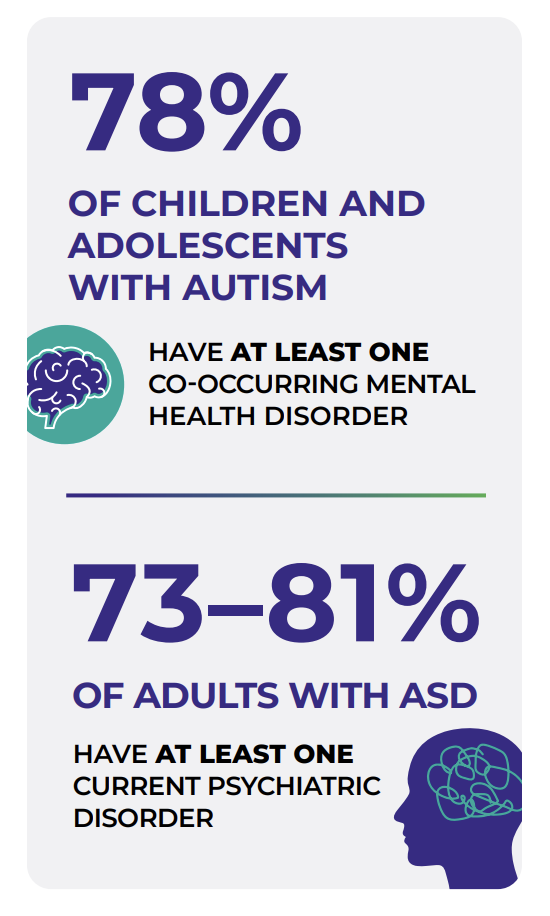
Children, adolescents, and adults with autism spectrum disorder (ASD) face a mental health crisis. They experience psychiatric conditions at far higher rates than those without autism, profoundly affecting quality of life. As Dr. Roma Vasa says, “It’s the psychiatric and behavioral conditions that often become more difficult to manage than the autism itself.”
For many children, anxiety, ADHD, and behavioral challenges emerge before the age of five years. When recognized early, children can receive support and interventions that can change the course of their lives. Often, however, the diagnosis of psychiatric conditions comes later, when the child is older, because families cannot access mental health services or because a clinician or family member does not understand the role of psychiatric illness in autism. This delay creates years or even decades of struggling, misunderstanding, and lack of proper supports.
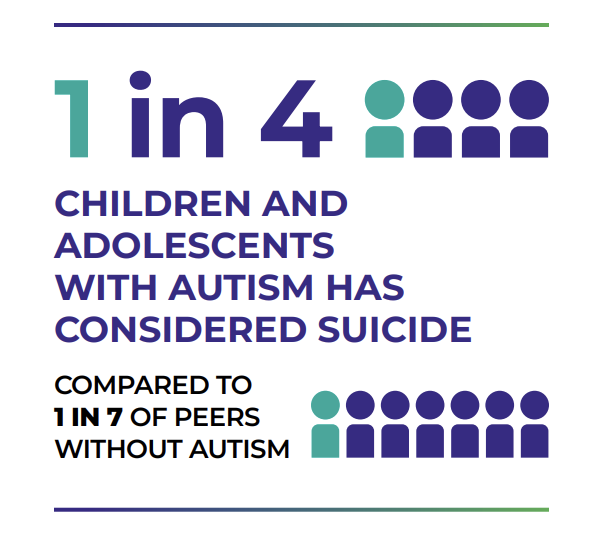
Without early detection, a child’s mental health problems can snowball. For example, a child with autism who struggles to focus in school may develop anxiety. That anxiety can grow into depression, which if left untreated, can lead to thoughts of suicide. This is why the field needs more mental health experts who truly understand autism, and better mental health treatments specifically designed for individuals with autism.
Leading the Convergence of Mental Health and Autism
Dr. Vasa has spent over two decades leading research to advance understanding and treatment of mental health conditions in autism. Her research focuses on the biological and psychological roots of anxiety, one of the most debilitating challenges faced by autistic youth. Dr. Vasa is also dedicated to building training programs and strengthening systems of care to support better mental health care for this population.
Her interest in this work began during her general psychiatry residency at The Johns Hopkins Hospital. During her training, she had the opportunity to study neuropsychiatry at the Maudsley Hospital in London, where she learned about how brain processes affect mental and behavioral health. But what was missing was the focus on development – how can we identify mental health conditions early when the brain is still developing, and thus more flexible and responsive to treatments?
It was during her child psychiatry fellowship at The Johns Hopkins Hospital that Dr. Vasa found her true calling. Today, she stands at the powerful intersection of development, neuroscience, systems of care and resilience, a convergence that holds the promise to reshape how the world understands autism and mental health.
Translating Mental Health Discoveries into Lasting Impact
Kennedy Krieger is the world’s premier healthcare organization dedicated to improving the lives of children and young adults with care and research focused on disorders and injuries of the developing nervous system, from autism spectrum disorder and intellectual disability to Batten disease, cerebral palsy, acute flaccid myelitis and more than 200 ultra-rare diseases.
That means we are comfortable in uncharted territory. In fact, it’s where we do our best work. Kennedy Krieger has a long history of undertaking and harnessing groundbreaking scientific research, conducting world-class clinical trials, and creating new treatments to change lives.
Dr. Vasa is uncovering new pathways to diagnosis and care to ensure that every person with autism and mental illness receives understanding, compassion and treatment when it matters most. Funding an Endowed Chair of Developmental Neuropsychiatry will provide more support for her continued leadership and innovation in advancing research and clinical care at the intersection of mental illness and autism with the goal of improving access to care and quality of life. Key priorities of Dr. Vasa’s work are to:
- Sustain groundbreaking research on the biological and psychological underpinnings of anxiety and other mental illnesses in autism. Currently, Dr. Vasa is spearheading a study in which autistic teens track their anxiety, moods and level of uncertainty on their smartphones. These findings could be used to develop digital treatments, which could help teens who cannot access treatment. She is also working with researchers on a study that helps parents of young children with autism learn strategies to reduce their child’s anxiety. Dr. Vasa has also been involved in research on suicide screening in autism.
- Reduce behavioral crisis in autism to improve quality of life for both the child and family. Dr. Vasa is working with others to conduct research, educate professionals and trainees, and build clinical programs to reduce behavioral crisis in autistic individuals. This work will hopefully lead to fewer crisis episodes, emergency room visits and inpatient psychiatric hospitalizations.
- Train and mentor future leaders in the field of autism and mental health, multiplying impact for decades to come. Dr. Vasa is building and strengthening the clinical skills of junior-career child psychiatrists, developmental pediatricians, neurologists, nurse practitioners, medical residents and others.
- Foster global dissemination and community collaboration, ensuring that discoveries reach the families who need them most. She builds bridges amongst different professionals, programs, schools and hospitals to create more coordinated systems of care to help autistic children and their families.
A gift to endow the Chair of Developmental Neuropsychiatry is not just an investment in sensitive, compassionate, holistic evidence-based care—it’s an investment in hope, resilience and possibility for individuals with autism and their families.
When a child with autism has psychiatric difficulties, it ripples through the whole family. We have an incredible opportunity to bring everyone together to help that child get back on track.” – Dr. Roma Vasa