


Visit the International Center for Spinal Cord Injury Website to learn about participating in research studies
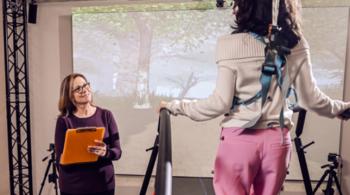
Anecdotal evidence already provides strong support for the value of advanced, activity based restoration therapies (ABRT) in helping individuals with spinal cord injury and paralysis recover sensation, function and mobility. The next step for spinal cord injury researchers is to evaluate the impact of these therapies in the animal model and to apply the acquired knowledge to human clinical trials designed to measure the therapies' efficacy. A retrospective trial of 60 adult patients' response to ABRT has been completed and results are already underway; another clinical trial evaluating the effect of upper extremities functional electrical stimulation (FES) to individuals with tetraplegia is currently enrolling subjects; a theoretical collaboration between Kennedy Krieger and Philadelphia's Shriner's hospital resulted in several peer reviewed publications regarding the effect of therapy's impact on pediatric spinal cord injuries.
In addition to these groundbreaking clinical trials, Dr. McDonald and his colleagues are also exploring new ways to perform cell transplantation. Currently, cell transplantation involves an expensive, complex procedure requiring a long-term inpatient hospital stay. In addition, the cell supply is limited. Using animal models, Dr. McDonald is developing a new transplantation process that can be done on an outpatient basis using nuclear transfer of embryonic stem cells.
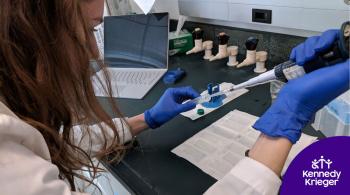
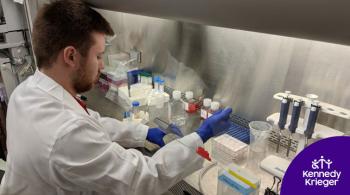
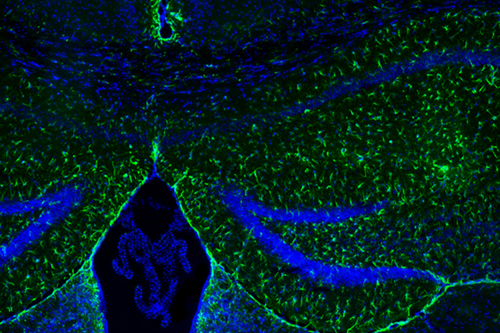
Depending on the focus of a particular study, the Center’s research personnel can rely on a wide variety of technologies to gather and evaluate their data. Techniques in regular use include organotypic culture, immunohistochemistry, autoradiography, fluorescence videomicroscopy, calcium imaging, electron microscopy, and frozen, paraffin and plastic section light microscopy.
Research Studies
NA_00014481 Patterned FES Ergometry of Arm and Shoulder in Individuals with Spinal Cord Injury
Principal Investigator: Cristina Sadowsky, MD
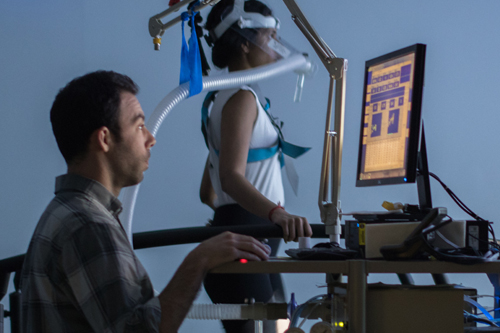
This research is being done to find out if Functional Electrical Stimulation (FES) arm cycling can improve the function of people with cervical spinal cord injury. FES arm cycling is a method of applying low level electrical currents to the arm and shoulder muscles to cause the weakened or paralyzed muscles to contract and produce a cycling motion of the arms. If you need additional information about a specific clinical research or if you think that you may be eligible, please call the ICSCI Clinical Research Coordinator at 443-923-9235 or clinicaltrials@spinalcordrecovery.org. Please be prepared to leave a detailed message, including the protocol number of the clinical research you are interested in and your contact information so that we may respond with a confidential message for you. You may also visit our website: www.spinalcordrecovery.org.
Click here for a list of current studies
·Daniel Becker, M.D.
·Devin S. Gary, Ph.D.
·Alexander H. Hoon Jr., MD, MPH
·Andres Hurtado, M.D.
·Michael V. Johnston, M.D.
·Qun Li, M.D., Ph.D.
·Guanshu Liu, Ph.D.
·John W. McDonald, M.D., Ph.D.
·Albert Recio, M.D., RPT, PTRP
·Michael Shamblott, Ph.D.
·Xiangcan Zhan, Ph.D.
·Peter C. M. van Zijl, Ph.D.