




Participate in Research Studies
In recent years, experts have made remarkable strides in better understanding autism, including developing more effective methods of diagnosis in treatment. At Kennedy Krieger Institute, researchers are continuing to investigate this complex disorder—in the hopes of not only improving diagnoses and interventions, but also discovering autism’s causes and possible means of prevention. Current studies are underway by research scientists at Kennedy Krieger to examine autism from a wide variety of perspectives, from behavioral assessments to brain imaging to cell biology and other methods.
Not all autism research relies on laboratory studies or sophisticated equipment. A central component of the Institute's autism research efforts is the Interactive Autism Network (IAN), an unprecedented national database with the potential to transform autism research not just at Kennedy Krieger, but at institutions worldwide. IAN will serve as a shared resource for families and individuals with Autism Spectrum Disorders (ASD), connecting them with other families and autism researchers throughout the world. In time, IAN will facilitate improvements in research, and allow families affected by autism a voice in developing the scientific and policy questions to be investigated.
NPR's Morning Edition features IAN Project
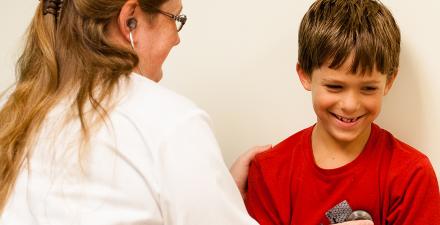
Some of the most compelling work being done at the Institute involves dedicated observation of children with autism and their behavior. This strategy forms the heart of the research conducted by Dr. Rebecca Landa who is involved in a large-scale project aimed at early diagnosis and early intervention of autism. One of the most intriguing parts of her research program involves studying the development of the younger siblings of children diagnosed with autism. In addition to helping researchers understand the earliest signs of this disorder, the sibling study has led to several children being diagnosed much earlier than they might have been otherwise, allowing their families to seek intervention as soon as possible.
Kennedy Krieger's Autism Research featured on ABC World News Tonight*
Dr. Andrew Zimmerman recently published a paper in the Annals of Neurology detailing his team’s observation of inflammation, elevated protein levels and unusual cell activations in post-mortem brain tissue and cerebrospinal fluid of people with autism. In time, work such as Dr. Zimmerman’s, which examines the biological elements of autism, could lead to the development of drug therapies designed to counteract these unusual conditions in the brain.
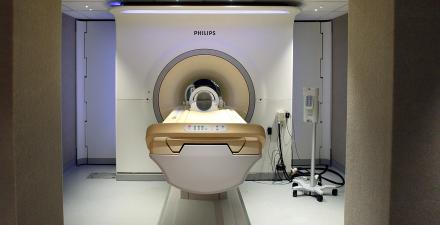
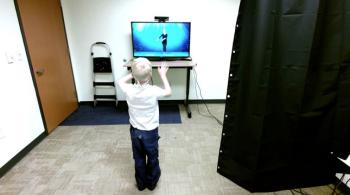
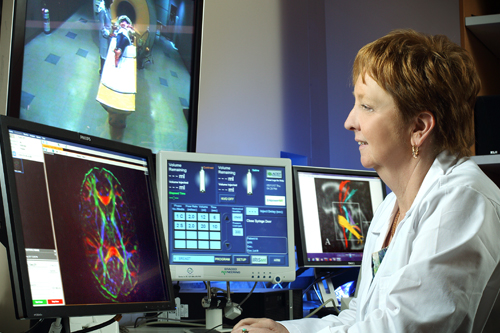
Dr. Stewart Mostofsky is using cutting-edge functional magnetic resonance imaging (fMRI) technology to explore why people with autism tend to have difficulty with motor-learning skills such as riding a tricycle or putting a key in a lock. Other researchers have already established that motor-learning and language production—the primary skill affected by autism—are governed by the same region of the brain. Dr. Mostofsky is using fMRI technology to determine if the brain activity of children with autism differs from that of other children when performing certain motor tasks. Understanding more about the brain abnormalities associated with autism may help direct treatment efforts, such as generating support for instructional methods that appeal to the unique learning profiles of people with autism.
Dr. Elaine Tierney and colleagues are studying different metabolic disorders that can present with autism spectrum disorder through the Autism Metabolic Research Program and the Center for Genetic Disorders of Cognition and Behavior at Kennedy Krieger. In 2000 and 2001 they identified that Smith-Lemli-Opitz-Syndrome (SLOS) is associated with autism spectrum disorder. Since SLOS is known to be caused by a defect in the body's biosynthesis of cholesterol, SLOS may provide clues to the biochemistry of other autism spectrum disorders. Dr. Tierney and colleagues at Kennedy Krieger and the National Institutes of Health are also performing a double-blind placebo-controlled study of simvastatin in individuals with SLOS.
Dr. Tierney and colleagues published a paper in 2006, in the American Journal of Medical Genetics Part B (Neuropsychiatric Genetics), in which they describe the finding that a small subgroup of children with autism spectrum disorders have abnormally low cholesterol levels. The children’s low cholesterol levels were apparently due to a limited ability to make cholesterol. This finding, in concert with their work with SLOS, has led them to believe that cholesterol may play a role in the cause of some cases of autism spectrum disorder.
These studies represent just a few of the innovative research projects Kennedy Krieger scientists are devoting to autism spectrum disorders. Other areas of research focus on the impact of certain medications on children with autism’s ability to participate in home and school life. With support from public and private grants, these researchers can continue to expand their current studies and launch new initiatives dedicated to answering the questions surrounding this challenging disorder.
For a list of related research projects in this area please check under the individual faculty profiles listed below:
·Mary E. Blue, Ph.D.
·George T. Capone, M.D.
·Michael F. Cataldo, Ph.D.
·Robin P. Church, Vice President for Educational Programs
·Iser DeLeon, Ph.D.
·Martha Bridge Denckla, M.D.
·Melissa C. Goldberg, Ph.D.
·Nancy Grace, Ph.D.
·Louis Hagopian, Ph.D.
·Alexander H. Hoon Jr., MD, MPH
·Walter E. Kaufmann, M.D.
·Richard I. Kelley, M.D., Ph.D.
·Patricia Kurtz, Ph.D.
·Rebecca Landa, Ph.D., CCC-SLP
·Paul Lipkin, M.D.
·Michele M. M. Mazzocco, Ph.D.
·Stewart H. Mostofsky, M.D.
·SakkuBai Naidu, M.D.
·Elaine Tierney, M.D.
·Roma Vasa, M.D.
·Andrew Zimmerman, M.D.
(http://www.autism-insar.org)