



Kennedy Krieger Institute Logo
Sidebar Menu Links
Introduction News/Events Diagnoses/Disorders Concerns/Symptopms Clinical Disciplines/Depts. Clinical Programs School Programs Affiliate Programs Research Professional Staff Professional Training Request an Appointment Employment
Print this page
Cerebral Palsy and Other Movement Disorders Research


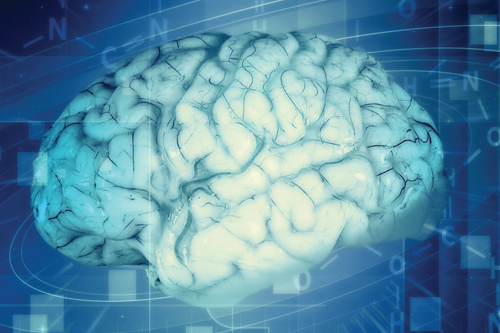
Cerebral palsy (CP) describes a group of congenital neurological disorders affecting tone and posture, and impairing movement. It results from genetic or acquired disorders which disrupt developing networks of brain cells (neurons) and connecting “cables” (white matter) that control movement. Impairment in motor function, with limitations in mobility and hand use, is the primary manifestation. Although a number of useful systems exist, classification into groups based on tone and limb involvement (bilateral spasticity, unilateral spasticity, extrapyramidal, and hypotonic/ataxic) is of benefit in guiding treatment. Brain MR imaging (MRI) has advanced the understanding of cause and can improve treatment.

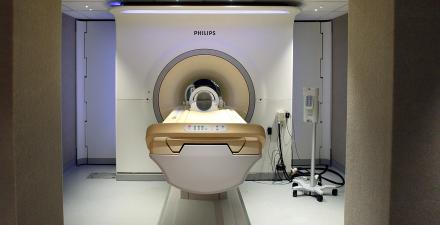
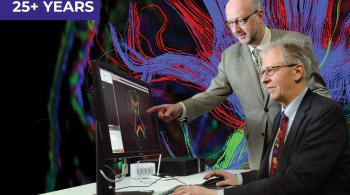
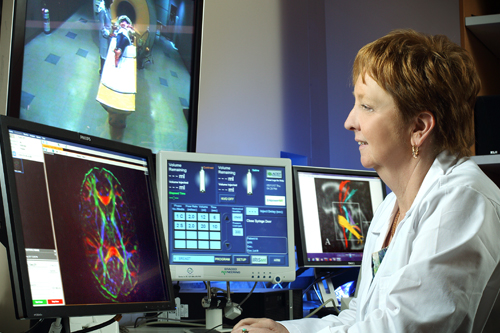
Running in parallel with clinical care in the Phelps Center for Cerebral Palsy and Neurodevelopmental Medicine are several Phelps Center research projects designed to improve classification and treatment for children with cerebral palsy. Using advanced neuroimaging techniques in the Kennedy Krieger Institute Kirby Research Center for Functional Brain Imaging including diffusion tensor imaging (DTI) to more precisely characterize brain injury, Phelps Center researchers have identified specific white matter pathways that carry messages from one part of the brain to another. DTI, a form of magnetic resonance imaging, shows white matter pathways in three dimensions, with color codes that identify individual bundles. Injury to these pathways is an important cause for the motor disabilities seen in children with CP. Previous imaging techniques have not been able to visualize white matter in such detail.

In two children born prematurely who have been studied so far, the research team was surprised to find injury to white matter pathways in unexpected areas of the brain. Although they anticipated injury in pathways that carry messages to the arms and legs from motor control areas in the front of the brain, these children had abnormal pathways in the back of the brain where sensory information is processed. This suggests that sensory processing may be very important for controlling tone and movement in children. In the future, DTI may be used to select appropriate therapy for children with cerebral palsy. For example if sensory pathways in the brain are abnormal, therapies that activate them, such as gait training or therapeutic horseback riding (hippotherapy), might be beneficial.

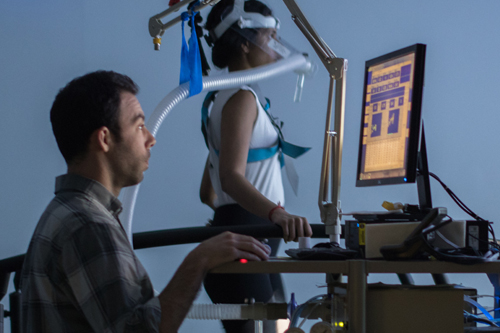
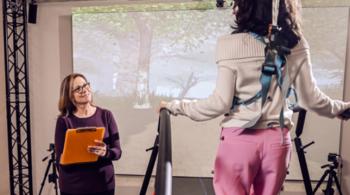
A second research project involves precise measurements of motor function, in collaboration with Dr. Amy Bastian. In her motion analysis lab, quantification of motor abilities in children with cerebral palsy is being investigated. It is anticipated that results of this work will improve classification of cerebral palsy as well as in evaluating the effectiveness of various rehabilitative interventions, from oral medications to intrathecal baclofen.

Overall, research projects are designed to improve treatment for children with cerebral palsy, and are formulated on the basis of needs of affected children and their families.

For a list of related research projects in this area please check under the individual faculty profiles listed below:

Related KKI Research Faculty:


Related JHU Research Faculty:


Contact: webmaster@kennedykrieger.org   Your Privacy: Privacy Policy
  © 2005 Kennedy Krieger Institute 707 North Broadway, Baltimore, MD 21205 - Directions