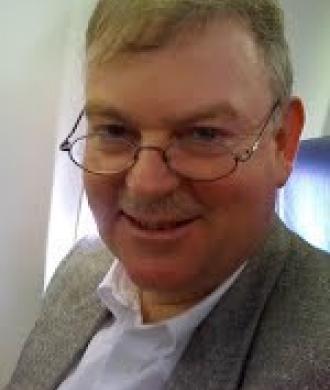
| Andres Hurtado, M.D. Research Scientist, Kennedy Krieger Institute Dr. Andres Hurtado is a Research Scientist, the Director of the Animal Injury and Repair CORE Facility at the Hugo W. Moser Research Institute at Kennedy Krieger and the International Center for Spinal Cord Injury (ICSCI), and a Faculty member in the Department of Neurology at Johns Hopkins School of Medicine. |
Biographical Sketch:
Dr. Hurtado earned his Medical Doctor degree in 1997 at CES University in Medellín, Colombia. Soon after Dr. Hurtado became an Instructor at CES University School of Medicine and EIA University School of Biomedical Engineering. In 2005 he graduated Magna Cum Laude with a Master’s of Science Degree in Biomedical Engineering at the University of Miami. While at the University of Miami School of Medicine he was a Post-Doctoral Associate with the Miami Project to Cure Paralysis.
In 2006 Dr. Hurtado joined Kennedy Krieger’s International Center for Spinal Cord Injury as a Research Scientist and in 2008 he joined the Faculty of the Neurology Department of Johns Hopkins University and became the Director of Animal Injury and Repair CORE facility at ICSCI.
Dr. Hurtado is a member of the Society for Neuroscience and the Biomedical Engineering Society.
In 2006 Dr. Hurtado joined Kennedy Krieger’s International Center for Spinal Cord Injury as a Research Scientist and in 2008 he joined the Faculty of the Neurology Department of Johns Hopkins University and became the Director of Animal Injury and Repair CORE facility at ICSCI.
Dr. Hurtado is a member of the Society for Neuroscience and the Biomedical Engineering Society.
Research Summary:
Spinal cord injury has devastating consequences and to date there are not effective repair strategies available. In order to achieve a successful repair, most likely a combination of therapies is going to be required.
Dr. Hurtado’s research interests focus on the use of biomaterials and cell transplants (alone or in combination) to replace lost tissue and to support axonal regeneration, re-myelination, and spinal cord restoration. Additionally, Dr. Hurtado is interested in approaches that reduce the formation of the inhibitory glial scar produced after a central nervous system (CNS) injury. As part of the ICSCI, Dr. Hurtado is also conducting in vivo experiments aimed at finding the underlying mechanism for recovery of function as evidenced after Functional Electrical Stimulation.
Recent Publications/Presentations:
Ylera B, Ertürk A, Hellal F, Nadrigny F, Hurtado A, Tahirovic S, Oudega M, Kirchhoff F, Bradke F. Chronically CNS-Injured Adult Sensory Neurons Gain Regenerative Competence upon a Lesion of their Peripheral Axon. Current Biology, 2009 April 29. [Epub ahead of print]
Nandoe Tewarie RD, Hurtado A, Bartels RHMA, Grotenhuis JA, Oudega M. Stem cell-based therapies for Spinal Cord Injury. J of Spinal Cord Med. 2009; 32(3):15-24.
Wang HB, Mullins ME, Cregg JM, Hurtado A, Oudega M, Trombley MT, Gilbert RJ. Creation of highly aligned electrospun poly-L-lactic acid fibers for nerve regeneration applications. J Neural Eng. 2009 Feb;6(1):16001. Epub 2008 Dec 22.
Hurtado A, Podinin H, Oudega M, Grimpe B. Deoxyribozyme-Mediated Knock Down of Xylosyltransferase-1 mRNA Promotes Axon Regeneration in the Adult Rat Spinal Cord. Brain 2008;131:2596-2605.
Hurtado A, Wang HB, Cregg JM, Mullins ME, Gilbert RJ, Oudega M. Axonal Guidance conduits containing aligned poly-L-lactic acid fibers implanted into the completely transected adult rat spinal cord. Biomedical Engineering Society meeting. St Louis, MO, USA. 2008 and the Society for Neuroscience 38th annual meeting. Washington, DC, USA. 2008
Hill CE, Hurtado A, Blits B, Bahr BA, Bunge MB, Wood PM, Oudega M. Early necrosis and apoptosis of Schwann cells transplanted into the injured rat spinal cord. Eur J Neurosci. 2007;26(6):1433-1445.
Hurtado A, Moon LD, Maquet V, Blits B, Jérôme R, Oudega M. Poly (D,L-lactic acid) macroporous guidance scaffolds seeded with Schwann cells genetically modified to secrete a bi-functional neurotrophin implanted in the completely transected adult rat thoracic spinal cord. Biomaterials 2006;27:430-442.
Nandoe Tewarie RD, Hurtado A, Levi ADO, Grotenhuis JA, Oudega M. Bone Marrow Stromal Cells for Repair of the Spinal Cord: Towards Clinical Applications. Cell Transplantation 2006;15(7):563-577.
Nandoe Tewarie RD, Hurtado A, Bartels RHMA, Grotenhuis JA, Oudega M. Stem cell-based therapies for Spinal Cord Injury. J of Spinal Cord Med. 2009; 32(3):15-24.
Wang HB, Mullins ME, Cregg JM, Hurtado A, Oudega M, Trombley MT, Gilbert RJ. Creation of highly aligned electrospun poly-L-lactic acid fibers for nerve regeneration applications. J Neural Eng. 2009 Feb;6(1):16001. Epub 2008 Dec 22.
Hurtado A, Podinin H, Oudega M, Grimpe B. Deoxyribozyme-Mediated Knock Down of Xylosyltransferase-1 mRNA Promotes Axon Regeneration in the Adult Rat Spinal Cord. Brain 2008;131:2596-2605.
Hurtado A, Wang HB, Cregg JM, Mullins ME, Gilbert RJ, Oudega M. Axonal Guidance conduits containing aligned poly-L-lactic acid fibers implanted into the completely transected adult rat spinal cord. Biomedical Engineering Society meeting. St Louis, MO, USA. 2008 and the Society for Neuroscience 38th annual meeting. Washington, DC, USA. 2008
Hill CE, Hurtado A, Blits B, Bahr BA, Bunge MB, Wood PM, Oudega M. Early necrosis and apoptosis of Schwann cells transplanted into the injured rat spinal cord. Eur J Neurosci. 2007;26(6):1433-1445.
Hurtado A, Moon LD, Maquet V, Blits B, Jérôme R, Oudega M. Poly (D,L-lactic acid) macroporous guidance scaffolds seeded with Schwann cells genetically modified to secrete a bi-functional neurotrophin implanted in the completely transected adult rat thoracic spinal cord. Biomaterials 2006;27:430-442.
Nandoe Tewarie RD, Hurtado A, Levi ADO, Grotenhuis JA, Oudega M. Bone Marrow Stromal Cells for Repair of the Spinal Cord: Towards Clinical Applications. Cell Transplantation 2006;15(7):563-577.
Contact Information:
Dr. Andres Hurtado, M.D.
International Center for Spinal Cord Injury
Hugo W. Moser Research Institute at Kennedy Krieger
707 N. Broadway, Rm. 523
Baltimore, MD 21205
(map & directions)
Telephone: (443) 923-9248
Facsimile: (443) 923-9210
Email: hurtado@kennedykrieger.org
International Center for Spinal Cord Injury
Hugo W. Moser Research Institute at Kennedy Krieger
707 N. Broadway, Rm. 523
Baltimore, MD 21205
(map & directions)
Telephone: (443) 923-9248
Facsimile: (443) 923-9210
Email: hurtado@kennedykrieger.org