Kennedy Krieger Institute Logo
Sidebar Menu Links
Introduction News/Events Diagnoses/Disorders Concerns/Symptopms Clinical Disciplines/Depts. Clinical Programs School Programs Affiliate Programs Research Professional Staff Professional Training Request an Appointment Employment
Print this page
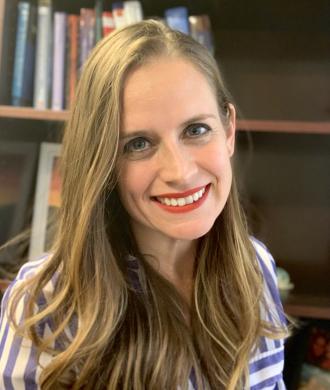
Meeta Patel, Ph.D.,BCBA


Dr. Meeta Patel is a case manger in the Pediatric Feeding Disorders and Early Intervention Programs at the Marcus and Kennedy Krieger Institutes. She has a faculty appointment in the Department of Pediatrics at Emory University School of Medicine.

Biographical Sketch:

Dr. Patel received a BS degree from the University of California at Davis in 1996 in psychobiology. She continued her graduate training in psychology at the University of Nevada, Reno. Dr. Patel received her Ph.D. in psychology under the supervision of James Carr, Patrick Ghezzi, and Sidney Bijou in 2000. She completed a post-doctoral fellowship at the Kennedy Krieger Institute and Johns Hopkins University School of Medicine in 2001 under the supervision of Cathleen Piazza. Dr. Patel joined the faculty at the Marcus and Kennedy Krieger Institutes and Emory University School of Medicine in 2002. Currently, Dr. Patel is a case manger in the Pediatric Feeding Disorders and Early Intervention Programs at the Marcus and Kennedy Krieger Institutes.

Dr. Patel also holds an adjunct faculty appointment at the University of Nevada, Reno. She supervises many masters and doctoral level practicum students from all of over the country. In addition, Dr. Patel serves as an outside member on dissertation committees at Auburn University.

Dr. Patel is on the editorial board for the Journal of Applied Behavior Analysis and Education and Treatment of Children. She has also served as a guest action editor for the Journal of Applied Behavior Analysis. Dr. Patel is a full member of the Association for Behavior Analysis and was a member of the executive council for the organization. She is also a Certified Behavior Analyst.

Research Summary:

Dr. Patel's primary research interest is in the area of pediatric feeding disorders. A feeding disorder is characterized by difficulties with eating or drinking that affect weight or nutrition. This problem may include food or fluid refusal or selectivity. Some children may be dependent on tube feedings to grow. A feeding disorder may be accompanied by behavior problems during mealtime (e.g., tantrums). Some children may also have skill deficits such as an inability to chew or swallow foods. Finally, medical problems such as vomiting also may play a role in the feeding disorder.

Children may have feeding difficulties as a result of a complex interaction between a number of factors. For example, medical problems such as reflux cause eating to be painful. Early experiences with pain during eating cause the child to stop eating and develop behavior problems (e.g., crying), which make it difficult if not impossible for the parent to feed the child. If the child frequently avoids eating, he or she may fail to develop the appropriate oral motor skills (e.g., chewing and swallowing) to be a successful eater. Other children may have peculiar feeding patterns, which could compromise their health or socialization.

Dr. Patel’s research focuses on developing appropriate treatments to increase oral intake and decrease tube dependency. In addition, she is conducting research that focuses on the long-term success of children with pediatric feeding disorders. Dr. Patel also has an interest in treating children with autism who display food selectivity.

Dr. Patel’s secondary research interest is on the treatment of autism in young children. Children with autism display deficits in the area of language and social development. In addition, these children may also display severe problem behaviors such as aggression and self-injury. Dr. Patel’s research in the area of autism focuses on treatment approaches to increase language and social skills and decrease inappropriate behaviors. In addition, she is devoted to conducting research to better train parents to work with their children in the home environment.

Recent Publications/Presentations:

Piazza, C.C., Patel, M.R., Gulotta, C.S., Sevin, B.S., & Layer, S.A. (in press). The relative contribution of positive reinforcement and escape extinction in the treatment of food refusal. Journal of Applied Behavior Analysis.

Patel, M.R., Piazza, C.C., Martinez, C.J., Volkert, V.M., & Santana, C.M. (2002). An evaluation of two differential reinforcement procedures and escape extinction to treat food refusal. Journal of Applied Behavior Analysis, 35, 363-374.

Patel, M.R., Piazza, C.C., Santana, C.M., & Volkert, V.M. (2002). An evaluation of food type and texture in the treatment of a feeding problem. Journal of Applied Behavior Analysis, 35, 183-186.

Piazza, C.C., Patel, M.R., Santana, C.M., Goh, H.L., Delia, M.D., & Lancaster, B.M. (2002). An evaluation of simultaneous and sequential presentation of preferred and nonpreferred foods to treat food selectivity. Journal of Applied Behavior Analysis, 35, 259-270.

Patel, M.R., Piazza, C.C., Kelly, M.L., Oschner, C.A., & Santana, C.M. (2001). Using a fading procedure to increase liquid consumption in a child with feeding problems. Journal of Applied Behavior Analysis, 34, 357-360.

Patel, M.R., Carr, J.E., Kim, C., Robles, A., & Eastridge, D. (2000). Functional analysis of aberrant behavior maintained by automatic reinforcement: Assessments of specific sensory reinforcers. Research in Developmental Disabilities, 21, 393-407.

Patel, M.R., Carr, J.E., & Dozier, C.L. (1998). On the role of stimulus preference assessment in the evaluation of contingent access to stimuli associated with stereotypy during behavioral acquisition. Behavioral Interventions, 13, 269-274.

Contact Information:

Meeta R. Patel, Ph.D., BCBA

Marcus Institute, an affiliate of
The Kennedy Krieger Institute

1920 Briarcliff Road
Atlanta, GA. 30329

Emory University School of Medicine
Department of Pediatrics

Office: (404) 419-4000
Fax: (404) 419-4015
E-mail: Meeta.Patel@Marcus.org


Faculty | Clinical Programs | Research


Contact: webmaster@kennedykrieger.org   Your Privacy: Privacy Policy
  © 2005 Kennedy Krieger Institute 707 North Broadway, Baltimore, MD 21205 - Directions